

The share of Slovenian companies using artificial intelligence (AI) rose from 22 per cent to 38 per cent in a single year, according to figures the Statistical Office of the Republic of Slovenia published on 8 October. Only 9 per cent have a document with instructions, guidelines, or procedures for using it, which means that at least three in four of the companies now using AI are doing so without written rules. At Jobs of the Future in the Age of AI, an event in Ljubljana on 18 November, executives from NLB, Zavarovalnica Triglav, and GEN energija described how three of the country's largest employers are handling it. On their telling, the tools were the easy part.
The statistics cover firms with at least 10 employees, and use rises steeply with size: 34 per cent of small firms use AI, 52 per cent of medium-sized ones, and 83 per cent of large ones, with services well ahead of manufacturing at 46 per cent against 29. Written rules follow the same slope, held by 41 per cent of large firms and 7 per cent of small ones. Among firms that had considered AI and still do not use it, the most common reasons given were concerns about data protection and privacy, unclear legal consequences, and a lack of expertise. Slovenia was already slightly ahead of the European Union last year, when Eurostat counted 20 per cent of enterprises using AI across the bloc against Slovenia's 22. The jump is not a Slovenian peculiarity: the Czech Statistical Office reported this month that the share in the Czech Republic had doubled to 35 per cent. EU-wide figures for 2026 are due in December.
Starting in a sandbox
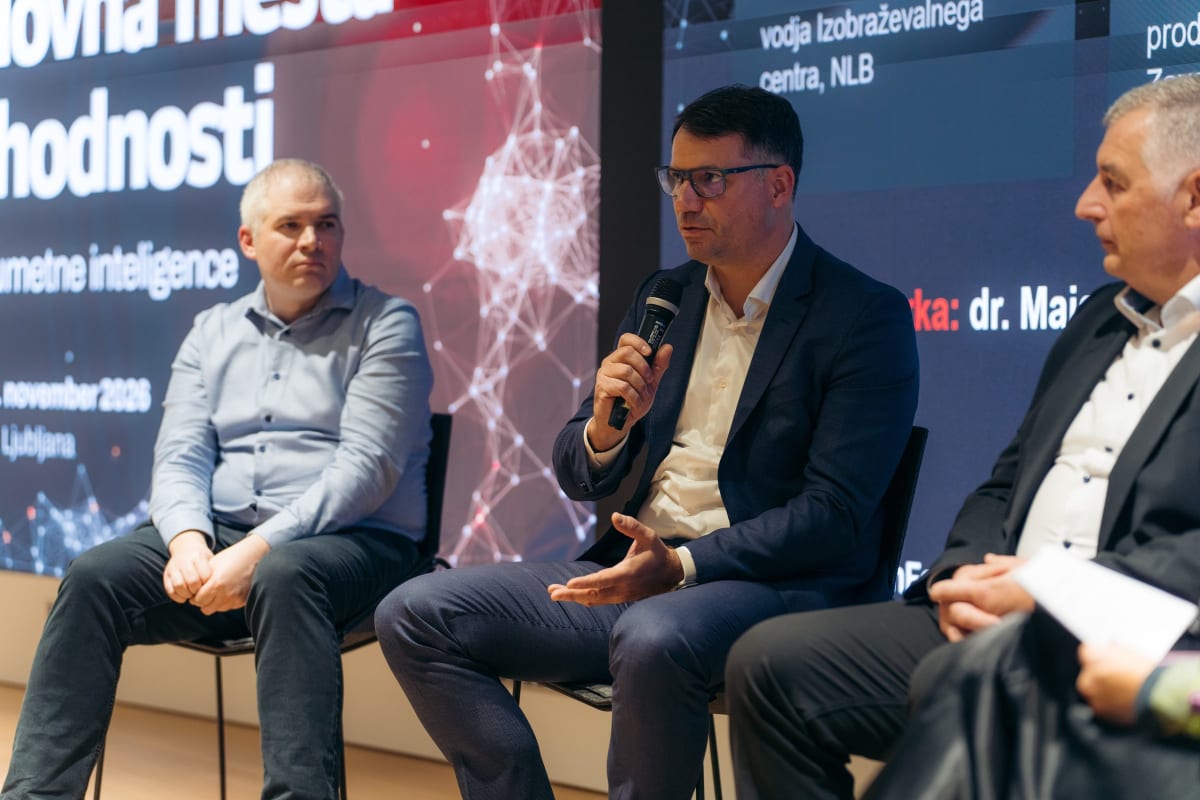
NLB, Slovenia's largest bank, began with experimental programmes meant to present AI to staff as an opportunity rather than a threat, said Uroš Velkavrh, who heads the bank's education centre. It bought licences so that employees could try the tools in a safe environment.
Zavarovalnica Triglav, the country's largest insurer, started where most companies start, in its contact centre, with systems that draft replies to customer emails, analyse feedback, and route each message to the employee best placed to answer it. Its use of AI in customer service was the subject of a 2024 Microsoft case study. From there it moved into claims, where AI helps assess the photographs customers send of damage on the road or at home. A few months ago Triglav launched Direkt, a car insurance product that is fully digital and supported by AI from the moment a policy is taken out to the payment of a claim. That, said Gregor Kovačič, Triglav's executive director of insurance sales, would have been impossible two years ago. The company has nevertheless kept a button that puts customers through to a live operator, because the relationship of trust an insurer depends on will, in his view, stay with people.
Routine, including the intellectual kind
What goes first, Velkavrh said, is routine work. By that he meant not only administration but intellectual tasks that repeat, wherever the data are digital and the processes are well documented. AI will struggle where information is scattered or was never written down at all, which in his view describes the areas Slovenian society invested least in when it digitised. He named human resources as an example. What people learn before they join still counts, but it ages fast: "Even our head of AI sometimes jokes that what students learn in their first year is already out of date by the time they start work." The question employees put to him most often is what they should learn so that the time they invest stays relevant, and the bank is already considering how to retrain staff whose roles AI will change.
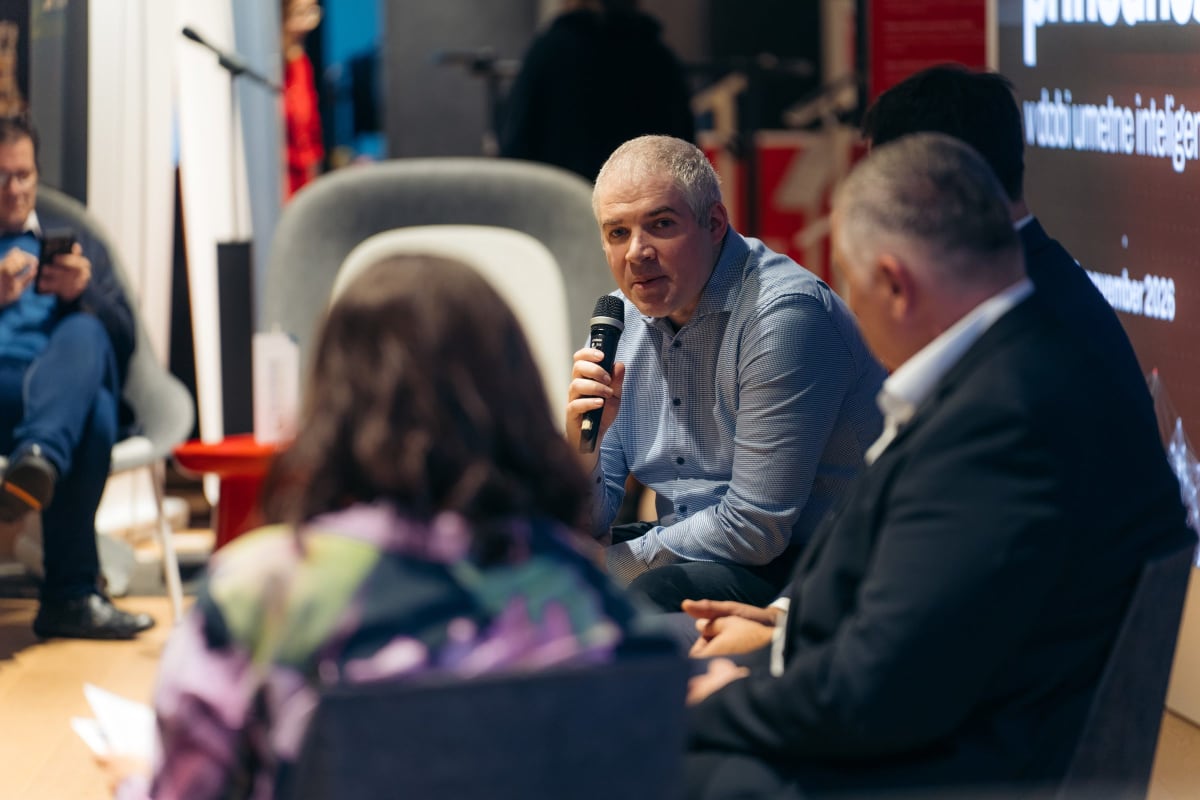
For Kovačič, the hours AI saves matter less than what employees do with them. "If we keep doing everything the way we always have, we can do things a little faster," he said. "But if we encourage people to think about how they can completely change the way they work with AI, it can spark a mini revolution that dramatically changes how we operate in the market." That depends on culture more than software: on mistakes being allowed, and on change starting at the top, where managers show how AI has altered their own work. Triglav is surveying staff on their digital skills to target its training. Its aim for 2027, Kovačič said, is to democratise AI across the company, so that ideas come from every department rather than only from IT or the call centre.
"If we encourage people to think about how they can completely change the way they work with AI, it can spark a mini revolution that dramatically changes how we operate in the market."
Gregor Kovačič, executive director of insurance sales at Zavarovalnica Triglav
Judgement takes longer than a course
Training, Velkavrh warned, is only the beginning: sitting through 16 hours of lectures on critical thinking "will not make me think critically". "We should admit that in Slovenia we are perhaps not the best at change management," he added, and that is where companies should be putting more of their attention.
Vinko Planinc, who heads new nuclear facilities at GEN energija and leads development of the planned second unit at the Krško nuclear power plant, had read a few years ago that AI would make experience less valuable and let younger generations overtake their elders quickly. GEN is finding the opposite. The person who will be valued more, he said, is the one with experience, who can judge critically, is prepared to decide, and can "take responsibility for their decisions" at the end of the day. "We use AI to search for information and find the right documents, but it is always a person who has to make the judgement," he said. Nobody, he added, would board a plane to Japan knowing it was flown by AI with no pilot in the cockpit. Because its data are sensitive, GEN works on a closed system, and the nuclear industry shares its experience with AI through its own closed network.
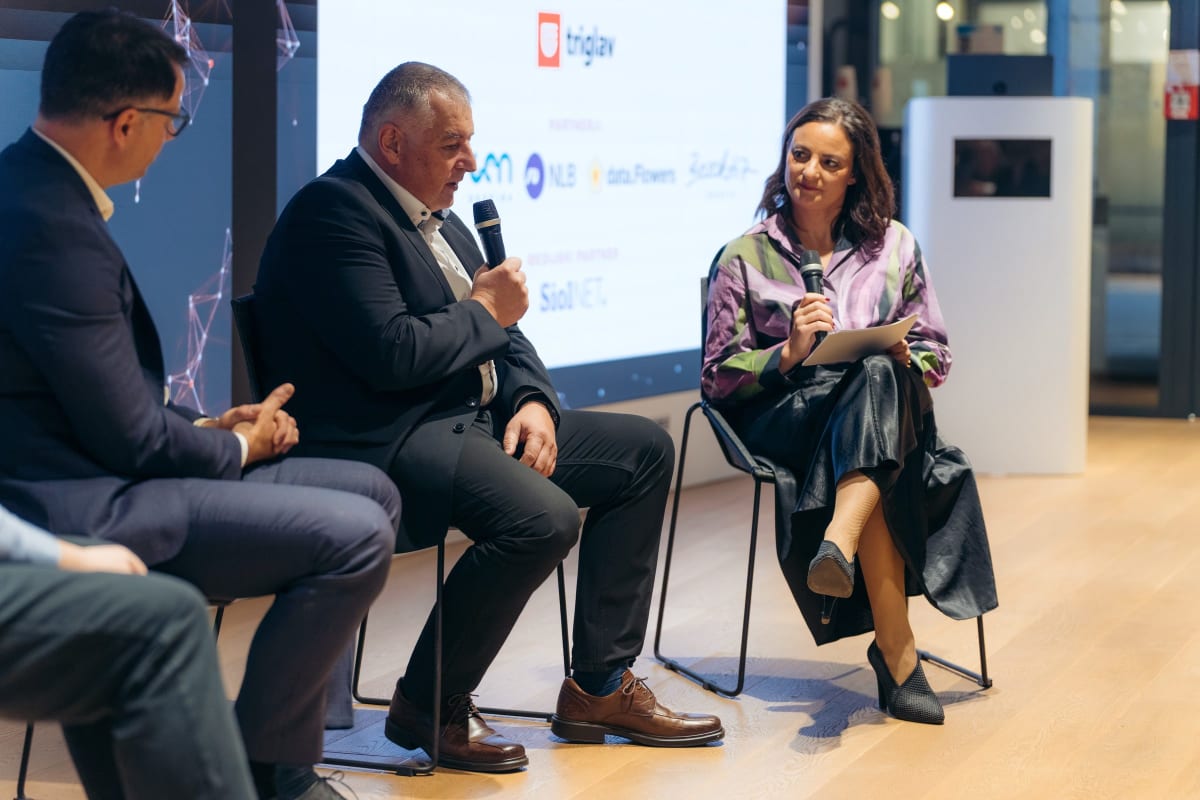
What takes longest is people. GEN's engineers spend another five years learning after university before they work independently, and the company records every deviation, analyses it, and shares what it learns. Planinc did not pretend this was cheap: the long apprenticeship is a barrier for young people, he said, but there is no shortcut. Nuclear energy settles who decides what before anyone touches the controls. Across Slovenia, on the statistics office's figures, at least three in four companies using AI have started the other way round.