
Slovenes know more about science than most Europeans. In the European Commission's Eurobarometer survey of 2024, which asked people across the union to judge ten statements, among them that the oxygen we breathe comes from plants and that lasers work by focusing sound waves, Slovenes gave the right answer 64.8 per cent of the time against an EU average of 60.9 per cent. What they think of the people who produce that knowledge is another matter. More than nine in ten describe scientists as intelligent, yet 47.4 per cent also call them narrow-minded, against 27.6 per cent across the EU, and Slovenia is the only member state where more respondents say the word fits than say it does not. Almost 30 per cent describe scientists as immoral, the second-highest share in the union.
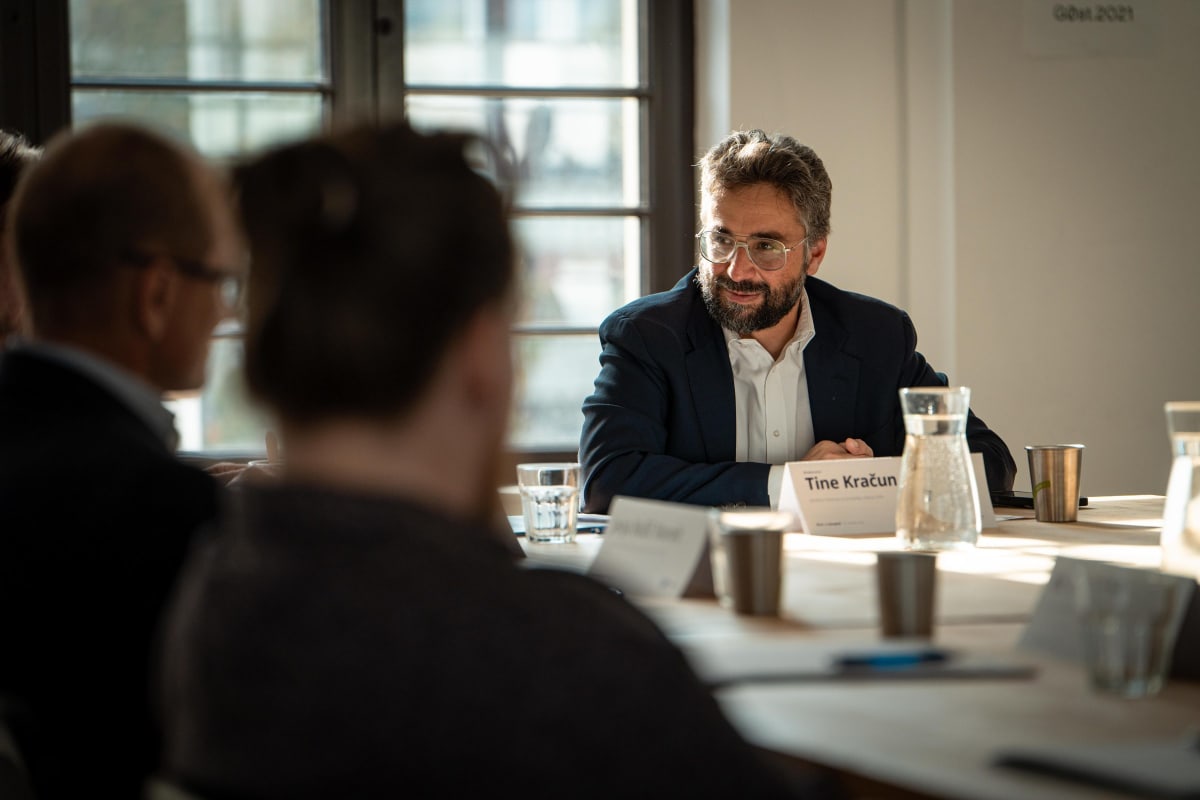
That gap was the starting point for a debate held at Center Rog in Ljubljana on 19 October by the Institute for Strategic Solutions (ISR), the think-tank that publishes The Adriatic, together with Alpacem Cement. Its title, Bistri, a ozkogledi, or sharp but narrow-minded, drew on the survey, and the speakers, drawn from business, academia and the civil service, spent the afternoon on why a well-informed public can still withhold its trust.
Not a shortage of facts
The convenient explanation would be that the doubt sits with the less educated, and the data do not bear it out. In every group ISR looked at, whether by sex, place of residence or social position, the share calling scientists narrow-minded is at least 16 percentage points above the European figure for the same group. Education does a great deal to belief in conspiracy theories, so that the most educated are around 20 points less likely than the least educated to accept claims such as that a cure for cancer is being kept from the public for commercial reasons, but it does far less to the verdict on scientists, which falls only from 52.5 per cent among the least educated to 44.4 per cent among the most. Both questions were put to the same people in the same survey, so the difference cannot be blamed on separate samples.
Onora O'Neill, a British philosopher, made a version of the argument in her BBC Reith lectures in 2002, when she warned that disclosing more information does not by itself produce more trust. Tine Kračun, ISR's director, who chaired the debate, put it in institutional terms. "An institution cannot demand trust, nor can it create it with a better-crafted message," he said. "It has to show through its conduct that it deserves it."
Tomaž Vuk, who chairs the management board of Alpacem Cement, has met the problem from the side of a company. Trust in institutions is lower in Slovenia than elsewhere in Europe, he said, which makes life harder for business and slows down political decisions that would benefit everyone. "Sometimes people say we should be more transparent," he said. "We can show all the data, but if people don't believe them, if they don't trust whoever prepared them, then transparency doesn't help at all."
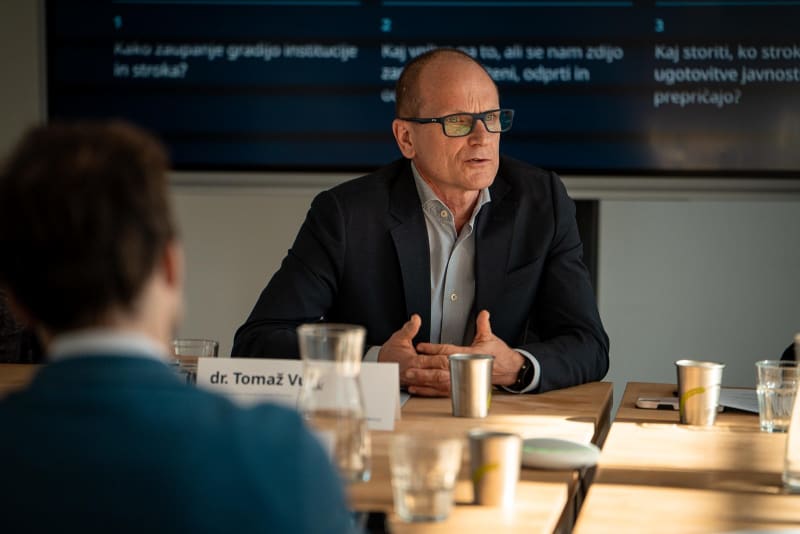
He linked the pattern to history. Trust in science is highest in Scandinavia and lowest in countries that have lived under authoritarian rule, he argued, and he reached for Alamut, a 1938 novel by the Slovene writer Vladimir Bartol whose motto, "nothing is true, everything is permitted", he reads as the mindset of Europe's authoritarian regimes of the 1930s, in which a truth nobody can know is easiest to invent. "If people don't get the truth from me, they will look for it elsewhere," he said. "We can't all know everything. We need institutions that we trust, that we support and make credible."
His own company has started close to home. Most of its employees come from the surrounding area, and Alpacem has worked first on trust inside its own team, on the reasoning that people who tell their families and neighbours without reservation how things are done at work will carry that conviction into the wider community. Nobody can expect to be handed trust, he said, because it has to rest on what a company actually does.
"We can show all the data, but if people don't believe them, if they don't trust whoever prepared them, then transparency doesn't help at all."
Tomaž Vuk, President of the Management Board, Alpacem Cement
A decade of stubborn work
Slovenia's banks know what that work looks like because they have had to do it. A decade ago trust in them was extremely low, said Andrej Krajner, head of brand and communications at NLB Group, the country's largest bank, and today banks sit high on what he called "the food chain of trust". The financial crisis of 2008 forced a reset, and the repair began with things that seemed to have little to do with communications: sorting out corporate governance, stabilising the ownership structure and with it the management, and ending the constant changes at the top that had once been routine. Then came years of work towards goals set in advance, pursued "systematically, at times even stubbornly", with strict attention to ethical standards and compliance so that old mistakes would not be repeated, and decisions that served the stability of the financial system even when they did not directly serve the bank. Only after that did the banks invest systematically in professional communications, marketing and sponsorship. "Trust collapses very quickly," Krajner said, "and then it takes years of long, tedious, stubborn work to build it again."
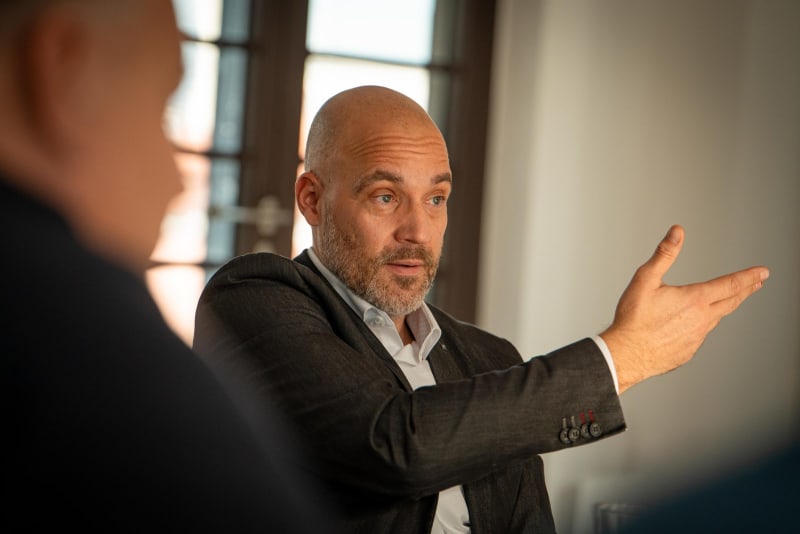
He is as worried about the channel as about the message. Slovenian media are in a structural crisis, he said, and there are practically no journalists left who cover banking, finance and insurance with real expertise, which pushes NLB to speak to its customers directly on social media without closing the gap. He hopes the media will reinvent themselves, perhaps in podcasts and other long formats that audiences evidently still have time for, because complex matters still need someone to explain them to the public.
"Trust collapses very quickly, and then it takes years of long, tedious, stubborn work to build it again."
Andrej Krajner, Head of Brand and Communications, NLB Group
Rules that hold
A cement maker can lean on its employees' neighbours, and the banks had a crisis to force their hand. For the public institutions the survey is really about, the other speakers kept coming back to consistency. Sonja Šmuc, director of the Razvojnik institute, said that what sets the Scandinavian countries apart is that their rules are clear and apply equally to everyone. Slovenia's legislation is not bad in itself, she argued, but it is applied inconsistently, and countries with systems that unpredictable are rarely rich. Maja Fesel Kamenik, a partner at the HR consultancy HRM One, named consistency alongside competence and character as what trust rests on.
The other answer was proof. Trust has to be earned with results people can check, said Janja Božič Marolt, who founded Mediana, a market and media research institute, and she took her example from her own trade. Pollsters are routinely accused of bias, yet in recent elections Mediana's projections from exit polls have repeatedly come very close to the final results.
Some of the distance is geographical. Science looks different from Pomurje, in the north-east, than it does from Ljubljana, said Mitja Slavinec, a physics professor at the University of Maribor who presides over the Pomurje Academy of Sciences and Arts. Most research institutes are in the capital, researchers are often poor communicators, and television does not usually broadcast the national science awards. Vuk's example came from across the border. In Austria, he said, the state, experts and the relevant authorities worked together to find sites for waste-to-energy plants, a coordination that is often missing in Slovenia, where anyone who takes something on alone is quickly accused of selfishness.
None of it amounted to a better-crafted message, which was Kračun's point to begin with.