
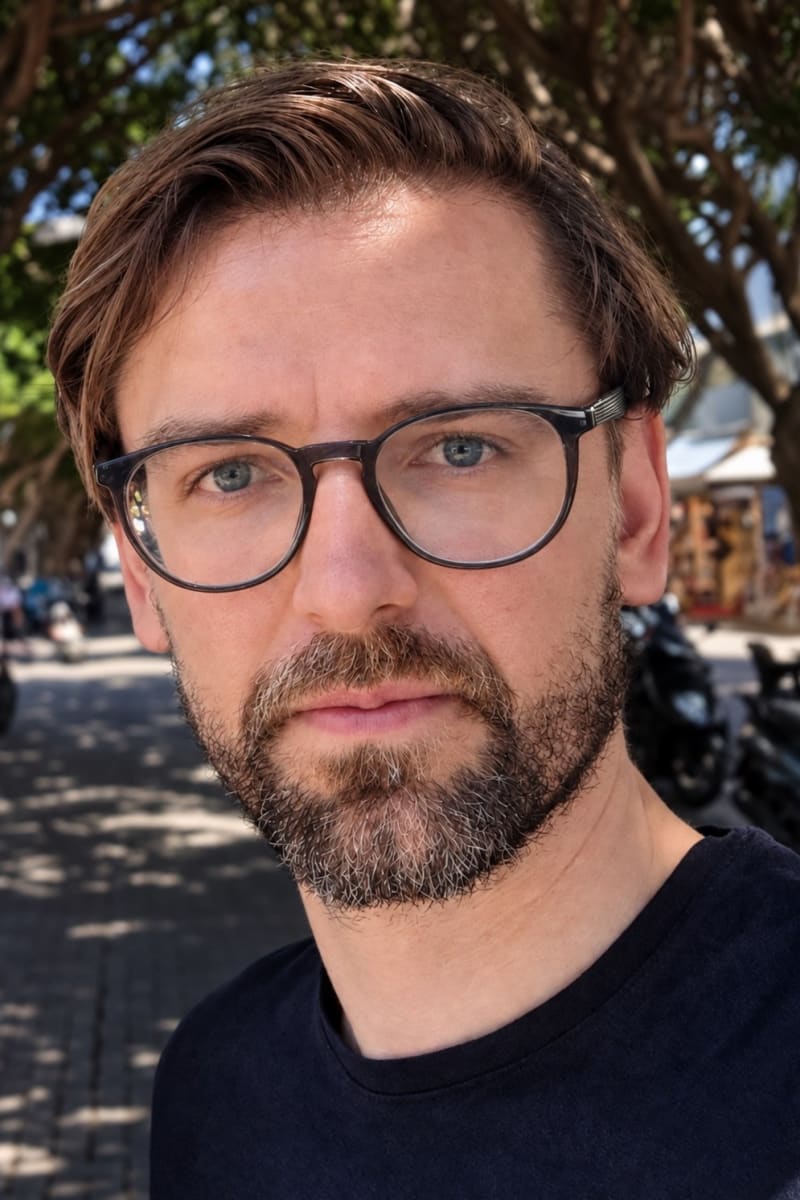
Historian Dr Aleš Šafarič heads the Sports Museum, part of the Slovenian School Museum, and founded Zgodovinanadlani.si, a popular history website. His research explores politics and physical culture before the First World War and between the wars. His small team preserves Slovenia's sporting heritage, from Stanko Bloudek to basketball. Anyone with old medals, sports shirts or photographs is encouraged to get in touch.
Where will we find you this weekend: in the archives, in the stands or away from sport?
Weekends are for relaxing and recharging. I rarely make firm plans, preferring time with my partner, friends and things I cannot fit into the week. Sport still features: Sundays are usually for boxing and wrestling.
What is always on the table: food, a drink or a history book?
They say the way to someone's heart is through their stomach, so home-cooked food comes first. Add a good history book, a film or an interesting conversation, and the weekend is almost perfect.
If you could save one object from your collection, what would it be?
The hardest question for a museum professional! Every object has its own story and matters to our sporting heritage. I would probably save the server holding our collection records: without information, objects are just objects. Their stories give them value.
"Without information, objects are just objects. Their stories give them value."
Aleš Šafarič, Sports Museum
Why is sport, like language and culture, important in building a state, especially for a small nation?
Measurable results give sport objectivity and limit larger nations' power. A small population can affect consistency, especially in team sports, but does not prevent athletes reaching the top. Slovenia repeatedly proves this, giving it stature beyond its size at home and abroad.
Your basketball exhibition has travelled from Koper via Ljubljana to Maribor. Why basketball, and why tour?
Without premises for a permanent exhibition, we have adapted our strategy, working mainly with Slovenian museums to reach the communities where sport begins. Laško, Brežice and places across Slovenia and in Slovenian communities in neighbouring countries will follow. Sport grows from the grassroots: without local success, there is no national or international success.
Basketball is hugely popular here, with a rich history, major club and national team achievements, and compelling stories. We have built on our existing collection with help from the Basketball Federation of Slovenia, clubs, players, coaches, referees and others.
Which Slovenian sporting story deserves more attention?
What fascinates me is how many stories remain unknown. Even a seemingly minor document can reveal an unfamiliar world. Slovenian emigrants and their descendants have also made, and still make, a considerable sporting contribution that deserves wider recognition.
We can all help preserve these stories. We call the museum the guardian of Slovenia's sporting heritage, but protecting it is everyone's responsibility, including society and the state. If we do not care for it, no one will do it for us.
"We cannot measure importance solely by medals."
Aleš Šafarič, Sports Museum
Which forgotten figure deserves to be as well known as Stanko Bloudek?
Bloudek's contribution was outstanding, but Slovenian sport comprises thousands of stories of athletes, officials, workers, patrons, relatives and friends. Before a champion succeeds, many others try without reaching the top. Their contribution matters just as much: pioneers pave the way for better successors until someone reaches the summit. We cannot measure importance solely by medals.
Why should every Slovenian visit the Sports Museum?
Our future permanent exhibition will place sporting history in its wider context. Sport touches almost every area of life, so talking about it means talking about society. Its values and principles are universal, its educational role timeless. Anyone seeking to understand the world, learn or revisit memories will find their way to the museum.