
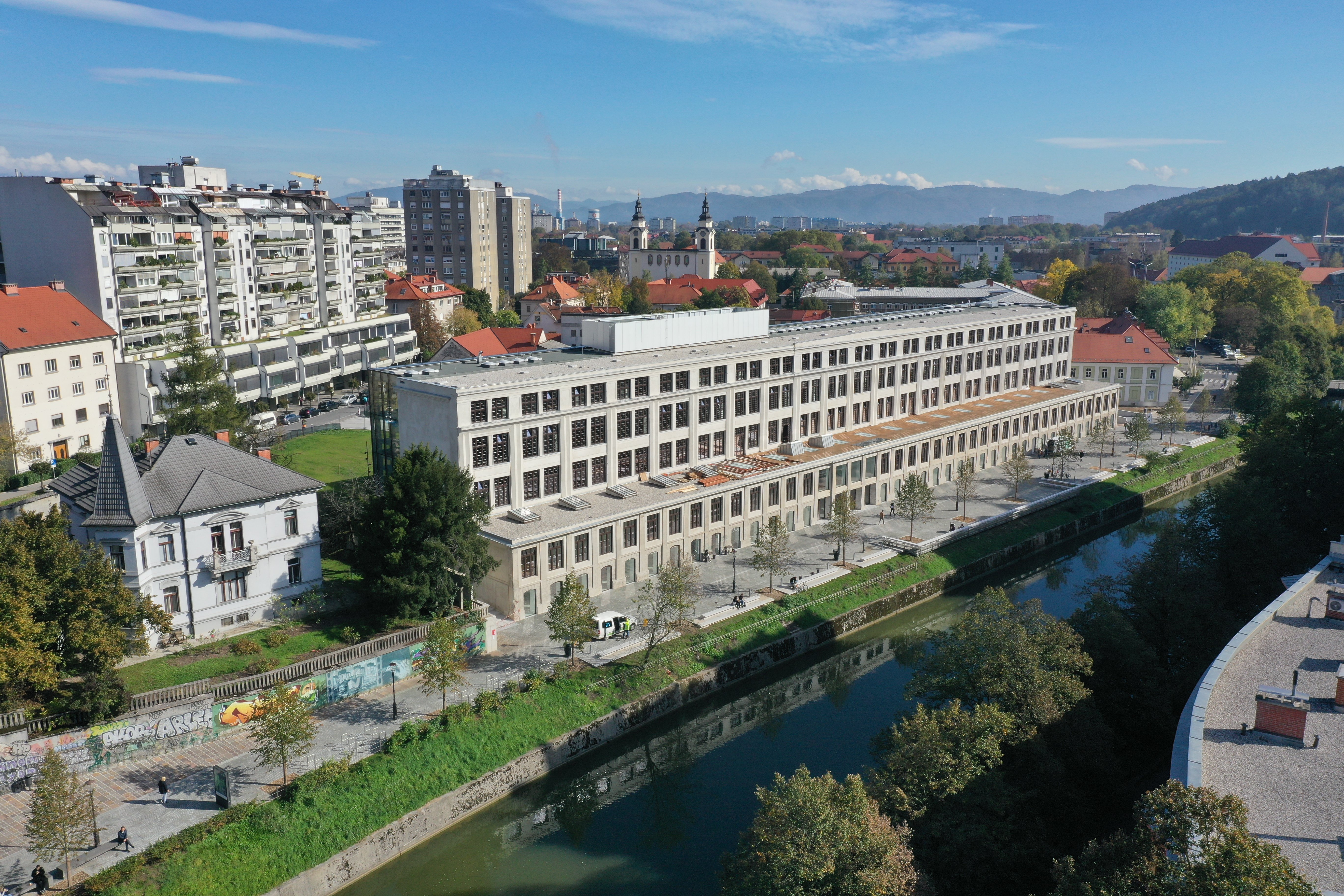
Center Rog development has been thoughtful and deliberate; the concept did not emerge overnight but evolved over 10 years, beginning with a pilot project: a small FabLab housed in a container on the Ljubljanica river embankment. This experimental phase made it possible to test needs and programs, ultimately shaping the comprehensive design of the centre as it stands today.
Located in the former Rog bicycle factory, the Center Rog opened its doors to the public at the end of 2023 following extensive renovation. After two years of operation, the institution is thriving. It now houses an impressive variety of laboratories and workshops equipped with numerous specialised machines, as well as a new branch of the Ljubljana City Library, studios, residences, and shops. The building is alive with creative people, from professionals and amateurs to locals and international visitors.
A creative hub for everyone
Many people wonder whether it makes sense to place such a large creative hub in a country with such a small critical mass as Slovenia, often asking: Do we even need something like this here?
Rog's management was aware of these concerns and therefore designed a program tailored to the local community and its needs. "For this very reason, the program is not limited to professional designers and the professional public. Given the small size of Slovenia, we decided to create as broad a program as possible, one that would appeal to everyone," explains Renata Zamida, director of Center Rog. Today, Rog attracts young people, adults, and seniors alike. The centre offers organised workshops and trainings in a wide range of design and creative fields, while also providing space for independent work. "Some come to acquire new skills, while others simply want to repair something and do not have the right conditions or equipment at home," she adds.
The architectural renovation of the former bicycle factory preserved its long, narrow production halls while adding a new six-meter-wide extension. This addition serves a crucial purpose: it created a so-called third space. These public areas with tables and corners for study and socialising allow visitors to gather without needing to pay or consume anything. This opened the centre to the city; people come not only to work but also to meet and connect. According to Zamida, children from nearby schools gather daily in Rog's bright spaces, and older neighbours visit to play cards. "Because so many people come and go, maintaining a healthy community is extremely important to us. For this reason, we are one of the first institutions in Slovenia to employ a community manager. This role supports both community relationships and the care of our building and shared spaces."
From labs to learning
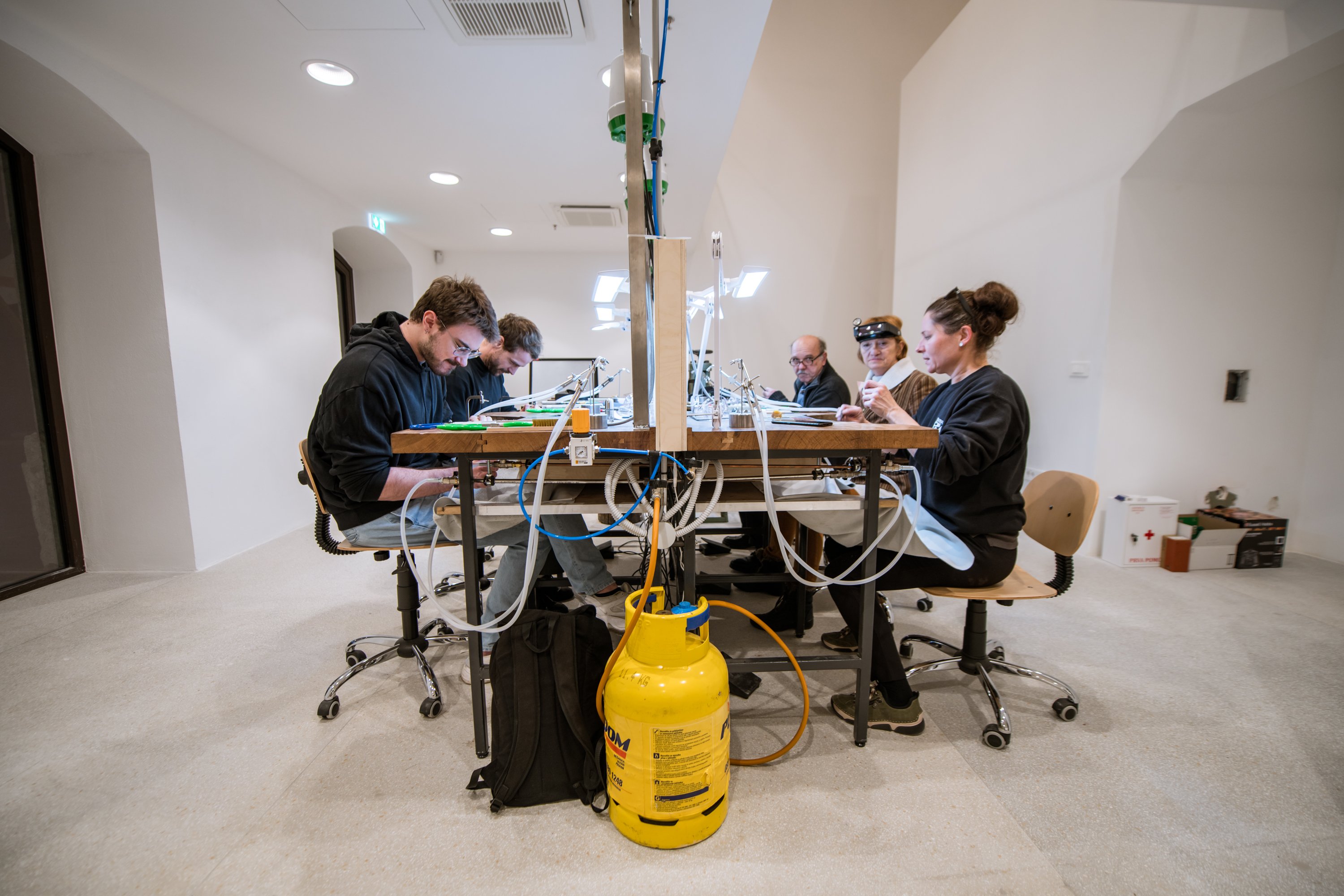
After 10 years of planning, which began with a modest experimental lab, the center opened to the public with nine laboratories: FabLab, metal, wood, glass, textile, green, ceramic, and cooking labs, later joined by a jewellery lab. Development did not stop with the opening.
"From the very beginning, we wanted to respond to the needs of local residents," Zamida explains. "We carried out numerous test projects, engaged with neighbours and the broader Rog area, and listened to what they truly needed. Through participatory workshops, neighbours co-designed the outdoor park, which is now an edible park with an orchard and a community garden. Since the park is not managed by the city, it is maintained by a group of volunteers who receive produce and free training in exchange for their help."
"Due to the great interest in the textile lab, we expanded its facilities, and alongside the metalworking and glass labs, we opened a laboratory dedicated to jewellery making."
The establishment of the jewellery lab was supported by Zlatarna Celje, which remains a rarity in the world of artistic residency as a space adapted for residents with children or partners. Not least, an important innovation is the introduction of a family residency, living on the periphery of Slovenia.
The jewellery lab will ultimately benefit from training new generations of skilled goldsmiths and jewellery designers. Enthusiasts and complete beginners alike can attend workshops on creating decorations from biomaterials, sewing shirts, welding, making wooden Christmas trees, operating a combine harvester, and much more.
Local roots, global exchange
Center Rog also responds to the needs of local and international professional designers, who may apply for studios for project-based work which has to be the development of a new product or material through public calls. The studios are available to individuals and collectives working in fields such as crafts, product and fashion design, architecture, engineering, and applied arts, for periods determined by the complexity of their projects. In this way, Rog addresses the lack of production spaces available to domestic creators while offering mentoring, technical support, and a valuable springboard for increased visibility and the launch of new creative ventures.
Eighteen studios are complemented by five residential units intended for foreign designers, researchers, and lecturers. Rog embraces both international guests and domestic creators.
Center Rog aims to fill the gap in the Slovenian creative sector that emerged after the collapse of large local industries. It functions as a missing link, once again providing essential access to prototyping and product development that was previously possible only abroad or at considerable cost. The success of this vision is reflected in the numbers: "Our goal of reaching 500 members in two years was surpassed by 3,000 members, which is a very positive indicator that we are here for a reason," says Zamida. She also emphasises the untapped potential within Slovenia's creative sphere: "There is still a gap to address, particularly the lack of connections between creators and industry."
The centre collaborates with the wider region on European and smaller-scale projects with nearby partners from the Western Balkans, maintaining a clear view of where development potential lies. They have not yet considered expanding the centre to locations around the world, but they regularly share their knowledge and invaluable expertise at international meetings, where they present themselves as a showcase of successful practice in revitalising heritage buildings and implementing forward-thinking programming.