|
18 July 2026
|
||||
|
||||
|
Published by the Institute for Strategic Solutions (ISR)
|
||||
|
Read this online here. Visit The Adriatic at theadriatic.si
|
||||
|
Powered by Post of Slovenia
|
||||
|
|
||||
Nobody is going to work and you can't make themAndraž Tavčar More and more Gen Zers, born between 1997 and 2012 with the oldest now pushing thirty, seem to be coalescing not so much around the refusal of work as around its futility. And I'd hazard this is a generational condition rather than a cultural one, holding wherever in the Western world you happen to stand. The internet injects both halves of the problem straight into the frontal lobe. On one side sits the awe, the Kardashian lifestyle beamed in as aspiration but received as taunt, ever further out of reach. On the other sits the dread, as inflation, demographics and geopolitics conspire to devalue whatever work still pays, with the foreboding promise of labouring until death as the reward for playing along. Even AI, which should have been a boon for anyone nursing imposter syndrome, is stripping the craft from the job. Employers now expect things built fast, and the instruction, increasingly, is simply to "put it in AI". The term most closely associated with the phenomenon is NEET, shorthand for anyone not in employment, education or training. It began life as an invention of British bureaucracy in the late 1990s and has since permeated social media and the wider internet as an identity in its own right. According to the Office for National Statistics, just over a million young Britons aged 16 to 24 were NEETs in early 2026, or 13.5% of the age group, the first time the figure has crossed the million mark since 2013. Of that million, roughly two in five are unemployed, the rest being "economically inactive," which is the statistician's way of saying they are not looking.
The issue has become a focal point even for Britain's prime minister in waiting. Launching his campaign in June, Andy Burnham called for a complete rethink of how the next generation is supported, starting with schooling. "The days of a school system configured entirely around the university route will be brought to an end," he declared. "University is great for those who want it, but when are we going to focus on the life chances of those kids who want something different?" But the state and the internet, which by now stands in for culture and society at large, speak two different languages on this. The official register assumes people want to work, treating unemployment as a problem to be solved. That misses the forest for the trees. Young people do not appear to feel they have a stake in our society as currently constructed. It is not a system that works for them, and they have no skin in the game to make it one. So they seek out community where it can be found, among like-minded individuals online, coalescing around chatrooms and memes in relationships that are parochial and parasocial at once, treating the sickness of social alienation with the poison of more screen time. The same platforms that offer recognition also traffic in narratives that grow steadily more extreme, since grievance, left to marinate among the like-minded, rarely mellows. Data from credit insurer Coface warn that labour market strains could reshape political dynamics outright, and the disengagement is already measurable. Among Britons aged 18 to 25 who are in work, just 8% say they don't know where they sit on the political spectrum. Among those out of work, the figure is 29%. Of adults in long-term unemployment or sickness, 37% say they would not vote at all. And those who do still show up are drifting away from the centre, with Labour and the Conservatives polling around ten points lower among 18 to 24-year-olds than among the general population, and smaller parties, the Greens in particular, picking up what falls away. But rather than political disengagement, I contend we will bear witness to a new, more alien and more radical sort of politics, stranger and more violent than the far right and socialism, those catch-all terms the media reaches for whenever anything sits off-centre. Any political vacuum can be filled, and the chatrooms where young people currently socialise are already supplying narratives more extreme than anything on the evening news, even as the news itself has grown steadily more bombastic over the past few decades. You have no idea what is out there. The young person who tells a pollster he doesn't know is not without views, not really. He is between them, and there is no shortage of people online offering to make up his mind for him. |
||||
|
||||
|
||||
|
|
||||
|
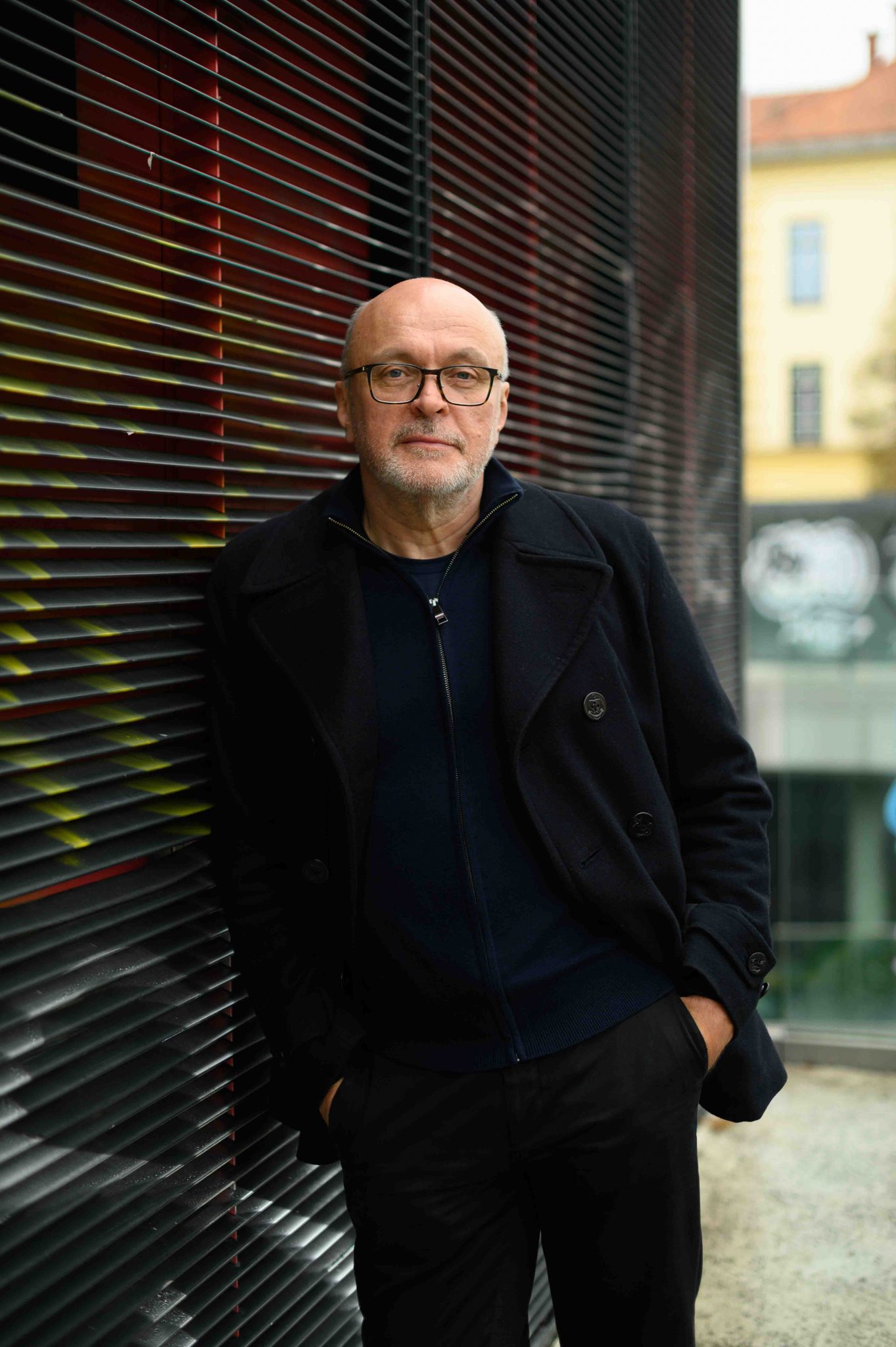
Tete-a-Tete We are Mexicans, after allMiha Mazzini is a Slovenian writer, screenwriter and film director whose thirty books have been translated into fifteen languages, earning him the Kresnik Award for Childhood and a Pushcart Prize along the way. He was the first Slovenian novelist to tell the story of the erased, the thousands stripped of their legal status after Slovenia's independence in 1992, later adapting it into an award-winning film by the same name.
|
||||
|
|
||||
|
||||
|
|
||||
|
Beyond politics The creative classMatjaž Ambrožič Literature, theatre, spectacles, music, film, and television by creators from the southeastern Balkans possess a magical yet often overlooked advantage at the highest level: they are understood and experienced by a much wider circle of audiences than the creators themselves imagine. Zoran Predin, one of the most famous Slovenian rock artists, recalls in the biographical documentary Praslovan: "In Lačni Franz, the band I fronted, we weren't even aware that for tens of thousands of our loyal fans in the region, we were their only contact with the Slovenian language. Many sang our songs without even knowing what or whom my lyrics described. And yet, over time, they all realised what I was singing about."
If we take a slightly broader view of this shared cultural space, we see that creativity continues to move freely across the region. Senidah, today the most popular Slovenian pop artist, built her success largely outside Slovenia's borders. She sings in her native Serbian/Bosnian - a language that opens doors across the entire region. Just as Croatian and Serbian acts regularly fill Slovenian venues, Slovenian performers find audiences in neighbouring capitals. The creative currents of the region flow both ways, proving that the cultural conversation never stopped. Read more here. |
||||
|
||||
|
|
||||
|
In Brief At NASA headquarters in Washington on 16 July, Serbia became the 69th signatory of the Artemis Accords, the agency's framework for civilian space exploration. Marko Đurić, the foreign minister, signed a day before the first session of a Serbia–US strategic dialogue, which the State Department said reflected a "new era" in relations, and joined a summit on political violence hosted by Marco Rubio while in town. The week's news from Brussels was less cordial: EU member states declined to endorse the Commission's recommendation to open a new negotiating cluster with Belgrade. The path to a government in Kosovo narrowed just as it seemed to open. With the results of the 7 June election certified, 53 of 120 seats for Albin Kurti's Vetëvendosje, Mr Kurti and Lumir Abdixhiku, leader of the third-placed Democratic League (LDK), had reportedly agreed in principle on a coalition. On 15 July, 148 LDK assembly delegates filed signatures demanding Mr Abdixhiku's removal, and he suspended the talks, saying he could not negotiate while his own mandate was in question. Albulena Haxhiu, the acting president, said the new assembly would convene in early August, within the constitutional deadline of 7 August. The country has held three elections in eighteen months. A self-imposed deadline for naming Bosnia's next High Representative expired on 14 July with the Peace Implementation Council, the body overseeing the country's peace settlement, still deadlocked. Washington backed Antonio Zanardi Landi, an Italian diplomat, while Berlin and Paris backed René Troccaz, a French one, a Danish compromise name, Peter Sørensen, circulated but was never formally proposed. Louis Crishock, an American diplomat, continued as acting head of an office whose future the two sides also dispute, with the US pressing to curtail its powers ahead of Bosnia's October elections. No date was set for the next attempt. |
||||
|
|
||||
|
We're taking August to prepare the autumn programme, with forums in Maribor and Celje on the calendar. The next dispatch arrives on 22 August. Gripes, requests or inquiries are welcome in the meantime at [email protected].
|
||||
|
|
||||
|