Ten weeks
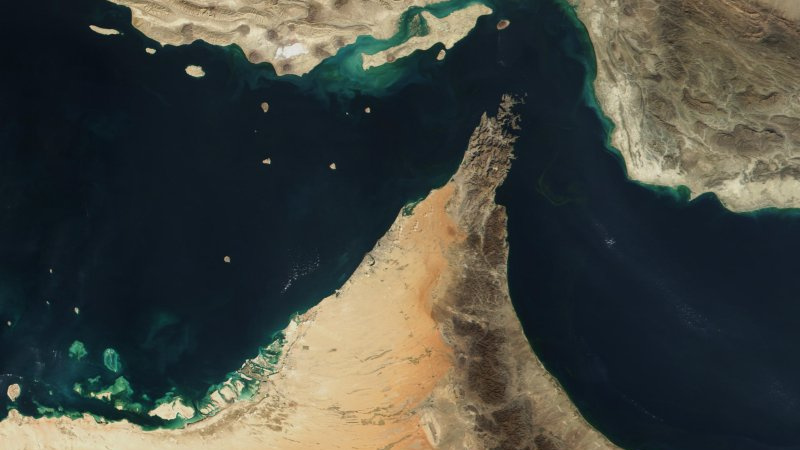
That is roughly how long oil reserves of European countries can cushion a sustained Hormuz blockade. What happens after that is a political question as much as a logistical one.
The Adriatic Team
When the first strikes hit Tehran in the early hours of 28 February, Donald Trump had made almost no public case for going to war with Iran. The State of the Union address delivered four days earlier had mentioned the country briefly, in passing, as a sponsor of terror. There was no prime-time address to the nation, nor a sustained campaign to prepare a sceptical public for what was coming. The administration appeared to believe – or at least to wager – that the result would speak for itself.
Shortly after Iran’s Supreme Leader Ali Khameini had been pronounced dead, after hesitation from Iran’s top brass, the Iranian Revolutionary Guard Corps has declared the Strait of Hormuz closed to transit – the first such closure since the Tanker War of the 1980s – and while satellite tracking shows the strait is not yet fully sealed, shipping has slowed to a near-standstill. Ships already at sea provide roughly three weeks of uninterrupted supply to global markets; after that, OECD strategic reserves, held at an average of two months, become the primary buffer. Bruno de Moura Fernandes, head of macroeconomic research at the French credit insurer Coface, calls the convergence of rising energy costs, higher interest rates, and falling equity markets “a recipe for stagflation,” and estimates that prolonged disruptions could push Brent crude toward 2022 levels of 120 dollars per barrel. A sustained increase of around 15 dollars per barrel, Coface calculated, would reduce global economic growth by approximately 0.2 per cent and add nearly half a percentage point to inflation – enough, in an already decelerating global economy, to force central banks to reverse the cautious monetary easing of recent months. Financial markets are already pricing a 40 per cent probability of an ECB rate rise this year.
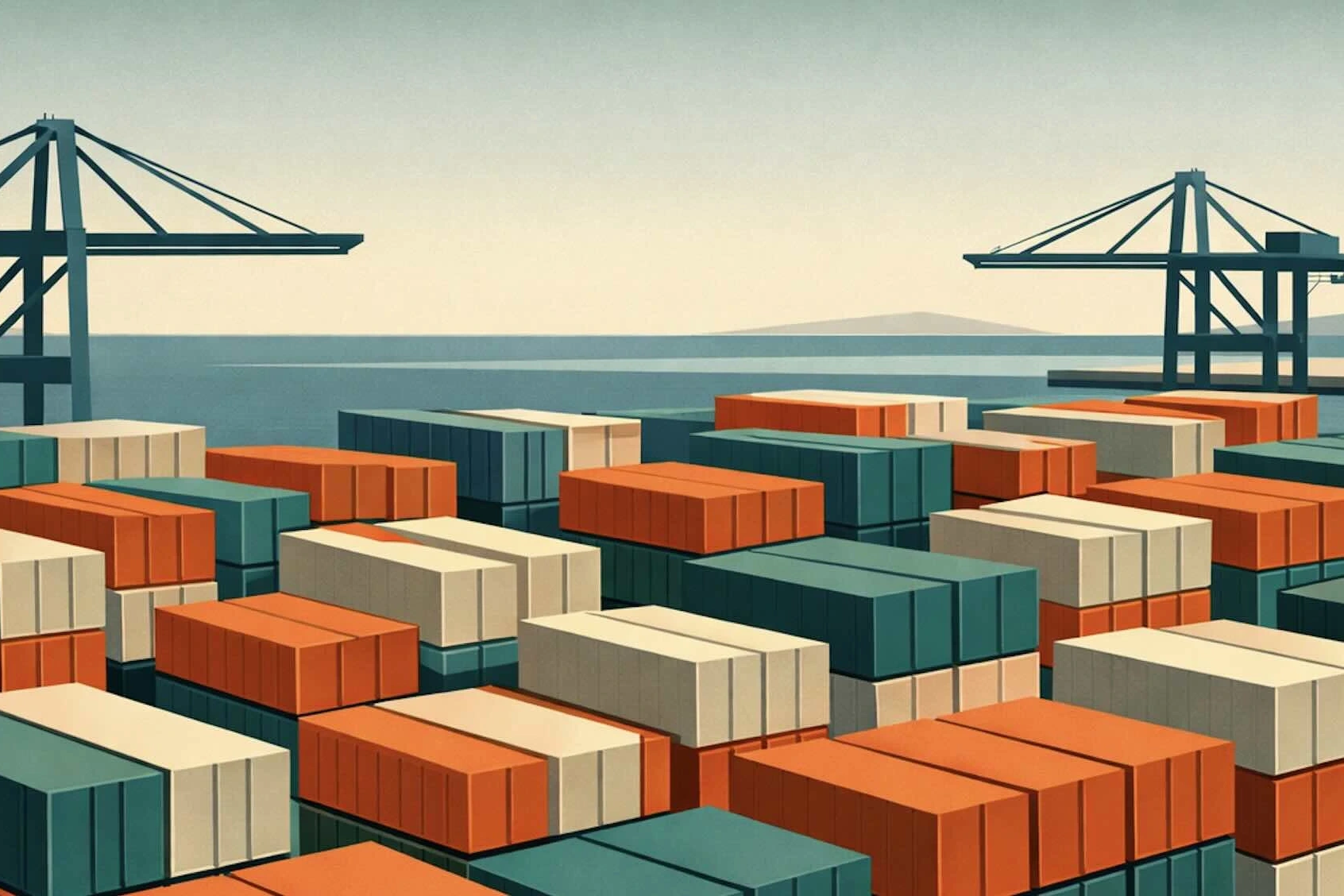
The disruptions in the Strait of Hormuz compound pre-existing stress from the Red Sea, where Houthi attacks have forced shipping around the Cape of Good Hope since late 2023. Maersk announced this week it was once again rerouting select services on that longer arc. Samo Kastelic, board member at Slovenian logistics operator Intereuropa, noted that war-risk insurance premiums are rising across the region, and that in some cases coverage from certain areas has become unavailable altogether. “Should conditions persist beyond a month,” he assessed, “freight capacity would tighten further, transit times would lengthen, and more businesses would begin seeking alternative routing or combined transport solutions, threatening a shift that would ripple through global supply chains well beyond the immediate conflict zone.” A US-Houthi ceasefire has not resolved the underlying vulnerability, and the two disruptions are now feeding each other.
The macroeconomic pain will also be distributed unevenly: the United States, which exports significant volumes of oil and gas, is better positioned than Europe, which since 2022 has tripled its Gulf energy imports to cover the gap left by Russian pipeline supplies. European governments will be absorbing a supply shock partly of Washington’s making, with limited capacity to influence how quickly it ends.
For an administration whose core political promise is lower prices, the energy channel is the most direct line between the Iran campaign and domestic discontent, and it is a line the American public is already drawing. Polling consistently places the economy, healthcare, and the cost of living far above foreign policy in the hierarchy of public concern: a YouGov survey last month found just 7.8 per cent of respondents identifying national security as the most important issue facing the country, while nearly two-thirds wanted the government focused on prices and affordability.
The polling on the war itself is similarly telling, with a Reuters/Ipsos survey conducted over the weekend finding only 27 per cent approving of the strikes, against 43 per cent disapproving. A CBS poll found broader support for action specifically to prevent Iran obtaining a nuclear weapon, but the same survey revealed that 60 per cent of respondents preferred sanctions or diplomacy as their method of choice, and that a large majority believed the president should have sought congressional approval before acting. He has not done so, and Democrats are already moving to formalise that expectation through legislation, starting a procedural fight that will keep the legitimacy question alive regardless of how the military situation develops.
The administration’s failure to build popular support before the strikes showcases Trump’s assumption that his grip on the Republican base insulates him from the kind of political attrition that eroded support for the Iraq and Afghanistan wars. But Iran is already producing a different dynamic within his own coalition. Tucker Carlson and Marjorie Taylor Greene have both voiced unease about the strikes as a departure from the domestic agenda that brought the president back to the White House, and a prolonged campaign in Iran has the potential to widen a developing split within the MAGA movement between those who see foreign policy assertiveness as an expression of American strength and those who regard it as a distraction from the economic promises that matter to the base. There is also a subtler shift in the broader public landscape: Gallup’s annual survey of Middle East sympathies, conducted last month, found for the first time slightly more Americans expressing sympathy with Palestinians than with Israelis, complicating the administration’s framing of the campaign as necessary support for a close ally.
None of this means the operation will fail politically. Trump has repeatedly demonstrated an ability to reshape the domestic conversation by controlling the terms of any declared outcome, and a swift conclusion – even one that falls short of the regime change that Operations Roaring Lion and Epic Fury appear to have targeted – could be presented to a public that never much wanted the war as sufficient vindication. The administration’s experience of last June’s strikes on Iranian nuclear facilities is instructive: deeply unpopular at the time, they did not materially alter Trump’s political standing. The resilience may hold again.
The question Washington’s policy community is quietly asking this week is whether the June precedent applies to a conflict of this scale and ambition. The June strikes were limited and time-bounded; this operation has killed Khamenei, targeted the country’s supreme leadership, and set in motion a chain of Iranian reprisals whose endpoint no one in the administration appears able to specify. A public that was not consulted, that places the economy above all other concerns, and that will shortly begin paying more at the pump may prove more patient than the numbers suggest. The administration has placed a considerable bet on that assumption.