The logistics of integration
Intereuropa manages freight across nine countries in southeastern Europe. Its strategy depends on borders becoming easier to cross.
Andraž Tavčar
Every week, freight trains and lorries move automotive parts, pharmaceuticals, and consumer goods from the Adriatic coast into the Western Balkans, a region where economic growth has outpaced Western Europe in recent years, but where logistics infrastructure has struggled to keep pace.
For Intereuropa, a Slovenian logistics firm with operations across nine countries in southeastern Europe, this gap represents both challenge and opportunity.
Global freight markets remain volatile. Container prices have eased from pandemic peaks, but demand is uneven, geopolitical tensions continue to disrupt trade routes, and logistics providers face sustained pressure on margins. Companies operating in the region must coordinate customs, warehousing, and transport across jurisdictions with differing regulations and uneven infrastructure.
Intereuropa has moved beyond traditional transport and customs clearance, developing more complex services in recent years, comprising warehousing, distribution, last-mile delivery. “Customers increasingly expect solutions tailored to their processes,” says Samo Kastelic, who joined Intereuropa’s management board in September after holding leadership positions at international logistics firms. The company operates twelve subsidiaries and manages over 260,000 square metres of logistics infrastructure across the former Yugoslav space.
That regional footprint, Kastelic argues, gives Intereuropa a structural advantage. Multinational clients operating across southeastern Europe can work with a single provider rather than coordinating separate contractors in each country. The company handles customs clearance, warehousing, distribution, and final delivery, or what the industry calls end-to-end logistics.
Warehousing expansion and high-value freight
Intereuropa’s recent investments have focused on capacity and service depth rather than geographic expansion. The company opened a logistics centre at Kukuljanovo, near the Croatian port city of Rijeka, and acquired additional storage facilities at Novi Banovci outside Belgrade. Combined with existing infrastructure across the region, total warehousing capacity now exceeds 260,000 square metres.
But warehousing alone is not the business. The company has shifted toward sectors where complexity commands higher margins. Pharmaceuticals require temperature-controlled storage and regulatory compliance. Food distribution demands tight delivery windows. Hazardous materials and oversized cargo need specialised handling expertise.
“We have strategically focused on certain industries and types of goods that require a high level of handling conditions, which also bring more added value,” Kastelic says. “Pharmaceuticals, food, retail, oversized cargo, dangerous goods.”
The logic is straightforward. Commodity freight is price-sensitive. Specialised logistics, tailored to specific industries and their regulatory requirements, offer more durable returns. Intereuropa expects that clients will value and invest in reliability and coordination in a region where these qualities are still hard to ensure.
The company also works extensively with automotive manufacturers, managing parts distribution for several major brands through its network. The Port of Koper, Slovenia’s sole maritime gateway, serves as the primary entry point for goods destined for the Balkan hinterland, and Intereuropa’s infrastructure is designed to connect that port to markets across the region.
Rail freight and the Koper-Belgrade corridor
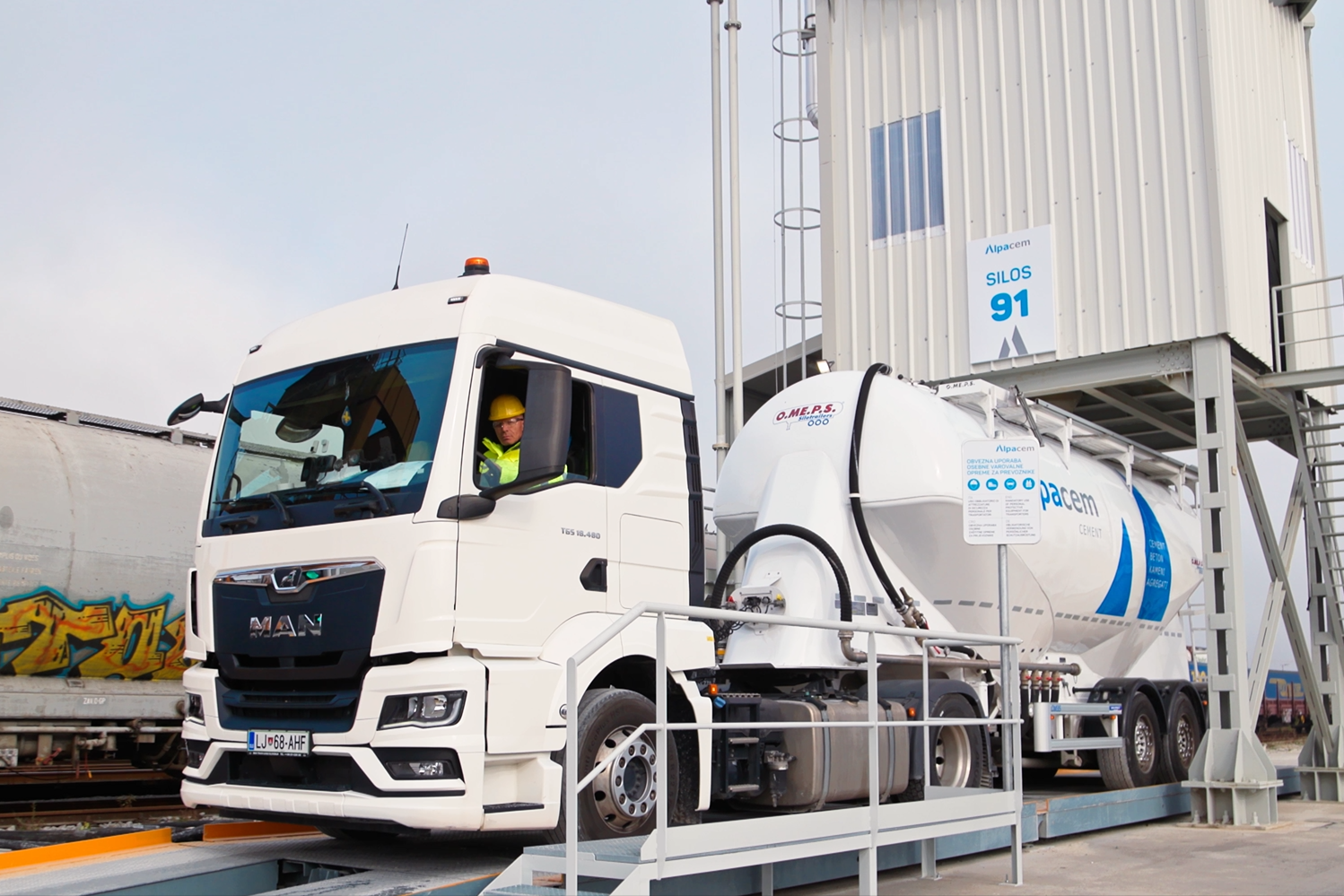
In 2024, Intereuropa launched a regular rail freight service between Koper and Belgrade, a twice-weekly connection designed to offer an alternative to road haulage.
The service reflects broader shifts in European freight policy. The EU has pushed for modal shift from road to rail as part of its decarbonisation agenda, and logistics providers are under pressure to reduce emissions across their operations. Rail is slower than air, but faster than road over long distances, and produces a fraction of the carbon emissions per tonne-kilometre.
“We moved part of our freight flow from road to rail,” Kastelic says. “Price competitiveness and level of service are decisive, alongside the environmental impact.”
The commercial case for rail depends on reliability and price competitiveness. If trains run on schedule and costs remain below road haulage, clients will shift volumes. If delays mount or pricing advantages erode, the incentive disappears. Intereuropa frames the Koper-Belgrade service as proof of concept and as a demonstration that intermodal freight can work in a region where rail infrastructure has historically lagged.
The company is also developing last-mile delivery capabilities to complement its rail and warehousing operations. The goal is full supply chain coverage. Goods arrive at Koper by sea, move by rail to regional hubs, are stored and processed in Intereuropa’s warehouses, and reach final customers via the company’s distribution network.
Digitisation and operational flexibility
Kastelic emphasises that physical infrastructure alone is insufficient. Without information systems capable of tracking shipments, coordinating customs documentation, and providing clients with real-time visibility, logistics networks cannot function efficiently.
“Appropriate information support plays an extremely important role in the quality execution of logistics processes,” he says. “Without it, it is practically impossible to imagine doing business.”
Intereuropa has invested in upgrading its core IT platforms, developing new systems for parcel distribution, and integrating data flows across its subsidiaries. The company maintains an in-house development team that works directly with clients to design bespoke solutions, tracking systems, inventory management, delivery scheduling tailored to specific supply chains.
The emphasis on flexibility reflects market conditions, as freight volumes fluctuate with economic cycles, trade policies shift unpredictably, and geopolitical disruptions can reroute supply chains overnight. Logistics providers must absorb these shocks without passing excessive costs to clients.
Container prices, though lower than their 2021–22 peaks, remain volatile. Demand in Western Europe has softened, while southeastern European markets continue to grow. Intereuropa’s regional focus positions it to benefit from that divergence, but only if it can adapt quickly to changing flows.
“We closely monitor conditions and strive to operate very flexibly,” Kastelic says. “We redirect transport capacity according to the structure and flows of freight.”
Outlook
Intereuropa plans to continue expanding warehousing capacity across the region, with particular focus on e-commerce fulfilment, where demand has grown rapidly and logistics requirements differ from traditional freight. The company already operates a fulfilment centre in Dravograd, Slovenia, and sees potential for similar facilities elsewhere in its network.
Investment in IT will also continue. The company is developing platforms for parcel distribution and upgrading applications that support core logistics processes. Kastelic describes digital capability as a competitive differentiator, one that allows Intereuropa to offer services smaller regional competitors cannot match.
The broader outlook depends on factors beyond any single company’s control. Southeastern Europe’s integration into European supply chains continues, but unevenly. EU infrastructure funding has flowed into the region, though project delivery remains inconsistent. Border procedures have improved in some corridors and stagnated in others.
Intereuropa’s strategy assumes that economic integration will proceed, that freight volumes will continue growing, and that clients will value reliability enough to pay for it. “Southeastern Europe has significant potential,” Kastelic says. The twice-weekly train from Koper to Belgrade keeps running, and the company is betting that more will follow.