Putin-proofing Europe, one cow at a time
Five years to turn farm waste into a strategic energy resource. On paper, the EU has a plan. On the ground, it has a problem.
The Adriatic Team
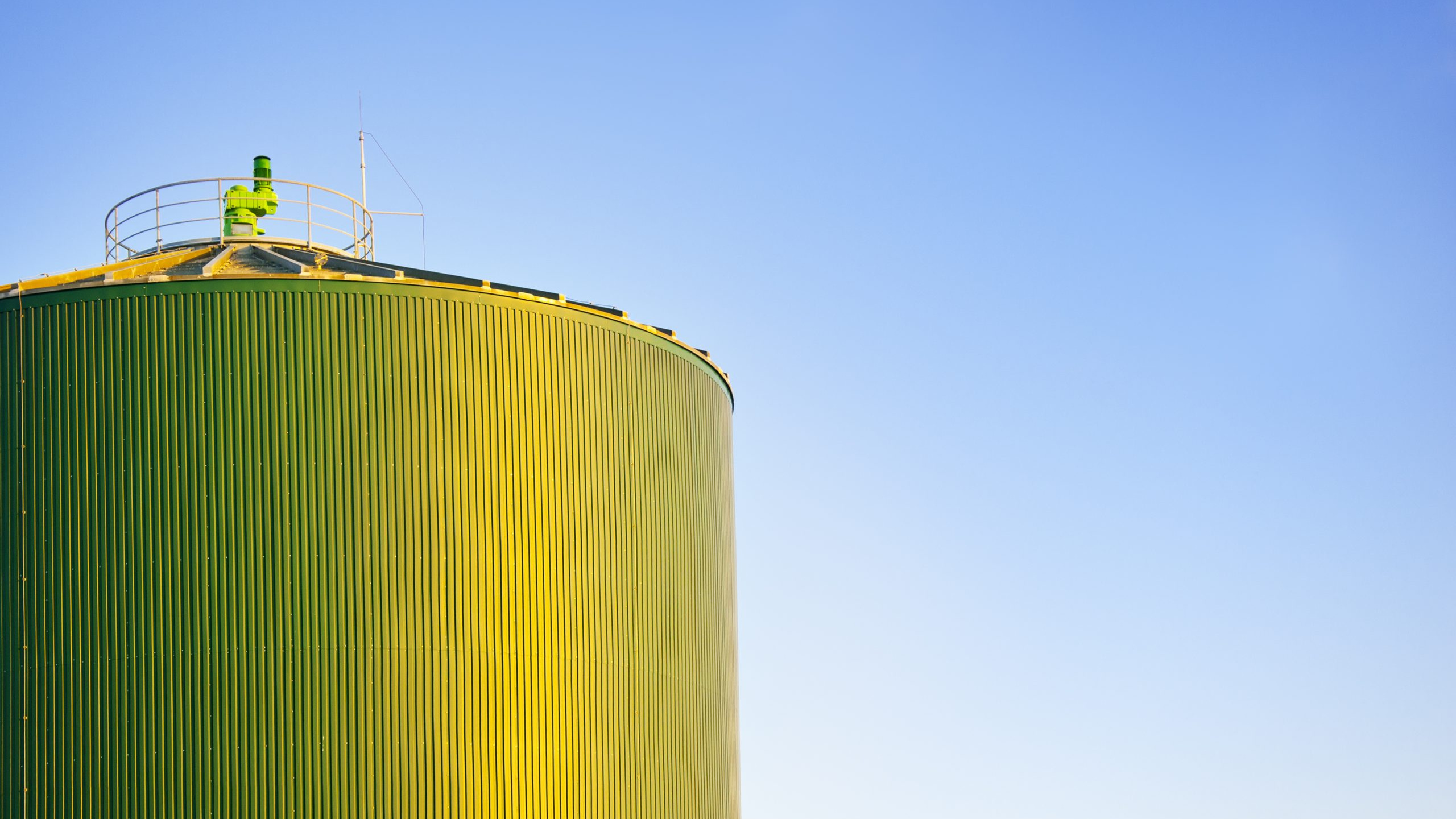
Somewhere in the flatlands of northeastern Slovenia, a digester is fermenting organic waste and chicken slurry into methane. The plant has been running since 2012. It’s one of two operated by Pannonia Bio Gas, which between them account for roughly half of Slovenia’s biogas output. Franc Dover, who took over as chief executive last year, can tell you exactly how many kilograms of food waste the average Slovenian throws away annually (more than 70), and exactly how much of that waste the country’s composting facilities can handle (not enough). He has spent the past year trying to figure out whether expansion makes sense. He is waiting for the government to tell him whether it’s possible.
This is the granular reality behind one of the European Union’s most ambitious energy targets: 35 billion cubic metres of biomethane by 2030. The number showed up in the REPowerEU plan in May 2022, three months after Russian tanks crossed into Ukraine, and it has been repeated in Brussels ever since. Thirty-five bcm. A sevenfold increase on current production and enough, in theory, to replace the gas that used to arrive from Siberia.
The logic behind it is sound. Biomethane is chemically identical to fossil gas, flows through the same pipes, burns in the same boilers, powers the same trucks. Unlike LNG shipments from Qatar or pipeline gas from Algeria, it doesn’t depend on shipping lanes, transit countries, or foreign policy. It’s produced locally, from local feedstock, and every cubic metre of it is one less cubic metre that needs to be imported. The geopolitical appeal is obvious. So is the climate case: biomethane captures methane that would otherwise escape from manure lagoons and landfills, turning a potent greenhouse gas into a usable fuel. Denmark already gets a quarter of its gas consumption from biomethane. Germany and Italy aren’t far behind.
But scale is the problem. Always the problem
“Europe has the technology, the feedstock, and the investment appetite,” says Piero Gattoni, president of the European Biogas Association. “Developers will only commit capital when the regulatory environment is consistent, predictable, and supportive across the value chain.” He ticks off the requirements: clear sustainability rules, faster permitting, support schemes that account for the wider benefits. Energy security. Waste management. Rural jobs. “Where these elements are in place, we see plants being built at record speed.”
Where they aren’t, nothing gets built at all.
The infrastructure question is just as knotty. Most biomethane plants are small, scattered across the countryside, hooked into low-pressure distribution grids near the farms and food factories that feed them. The European gas network, however, was designed to move molecules from big import terminals and production fields down to consumers. To hit 35 bcm, that logic has to reverse. Gas produced at the local level needs to flow upward into the high-pressure transmission system, and from there across borders.
The European Network of Transmission System Operators for Gas, or ENTSOG, which represents Europe’s gas transmission operators, calls this “reverse flow.” According to their latest network development plan, only two countries have formally planned for it: France and Denmark. Everyone else is still figuring it out. “In the case that any other region has such potential,” the plan notes, “the situation should be assessed by [transmission system operators] with their national authorities at country level.”
There are fiddlier problems, too. Biomethane can contain more oxygen than fossil gas, which affects its combustion characteristics. The EU’s principle is that such technical differences shouldn’t restrict cross-border flows, but harmonising specifications across 27 member states is slow work. The Guarantees of Origin system, which lets traders buy and sell biomethane certificates across Europe, depends on a Union Database that’s still under construction.
And then there’s Slovenia
Slovenia isn’t a major player in European biogas. Production is small and its ambitions sit somewhere between hopeful and irritated.
Dover came to Pannonia Bio Gas after years in public utilities and biofuels. He knows the compliance side, the procurement side, the part where you have to actually find the waste and get it to the digester. The inputs, he says, aren’t the problem. Slovenia produces more organic waste than it knows what to do with. Secondary crops that would otherwise rot in the field. Slurry from livestock operations. Supermarket stock past its sell-by date. Household scraps. Slovenians throw away a third of their food, and the composting system can’t absorb it. The digesters could.
The issue the industry faces in Slovenia, however, is that biogas cuts across traditional regulatory boundaries. It touches environment, energy, and agriculture, three ministries with three sets of priorities, and it doesn’t sit squarely in any of their briefs, creating a patchwork of rules that don’t quite fit together.
Then there’s the KOPOP scheme, a subsidy programme that pays farmers to adopt environmentally friendly practices. To stay eligible, farmers must follow strict rules on fertiliser use, and digestate counts against those limits. Digestate, the nutrient-rich residue left after fermentation, counts against those caps. Never mind that it’s organic, that it returns nitrogen to the soil without the carbon footprint of synthetic alternatives. On paper, it’s treated the same as the industrial stuff. Farmers who depend on KOPOP won’t risk their subsidies by taking it.
And then there’s NIMBYism, or “not in my back yard,” the reflexive opposition to any development that might affect the view from the kitchen window. Biogas has an image problem, most of it outdated. Modern plants are enclosed, the fermentation process is anaerobic, and the output is odourless methane. None of that matters much when a permit application lands on a village council’s desk. People hear “digester” and think of trucks, smells, industrial blight. The technical reality is rarely enough to overcome the gut reaction.
What it would take
A new law, ZSROVE-1, is expected next year, that would establish a dedicated support framework for renewable gases, setting out how biomethane producers get paid and under what terms they can connect to the grid. Industry groups have been pushing for what they call a “policy mix.” Subsidies to close the cost gap with fossil gas. Grants to help existing plants convert to biomethane production. A blending mandate that would require a minimum share of renewable gas in the grid, creating guaranteed demand.
Dover, in Dobrovnik, is cautiously optimistic. “We have the potential,” he says. “If we can cooperate at the national and local level, I see a win-win situation.” But he’s been here before. What he needs is simpler than policy papers make it sound. A proper legislative framework. Incentives that are actually attractive to investors. And some way past NIMBYism.
He’s old enough to remember what scarcity feels like. “Those of us who lived through the energy crisis in the twentieth century, independence, then the financial crisis, Covid, and now war on the EU’s doorstep – we know what self-sufficiency means. Energy, food, water, waste. When the sources narrow or disappear, you learn what matters.” He pauses. “We have to use every possible source for sustainable living and coexistence with nature. Biogas is one of the big ones.”