Inside Slovenia’s push for carbon-neutral cement
The cement industry today generates around 6% to 8% of all global CO₂ emissions, primarily due to the decomposition of limestone in the clinker production process, with a smaller share coming from kiln energy. Cement plants therefore play a crucial role in the decarbonisation of construction.
Jan Tomše
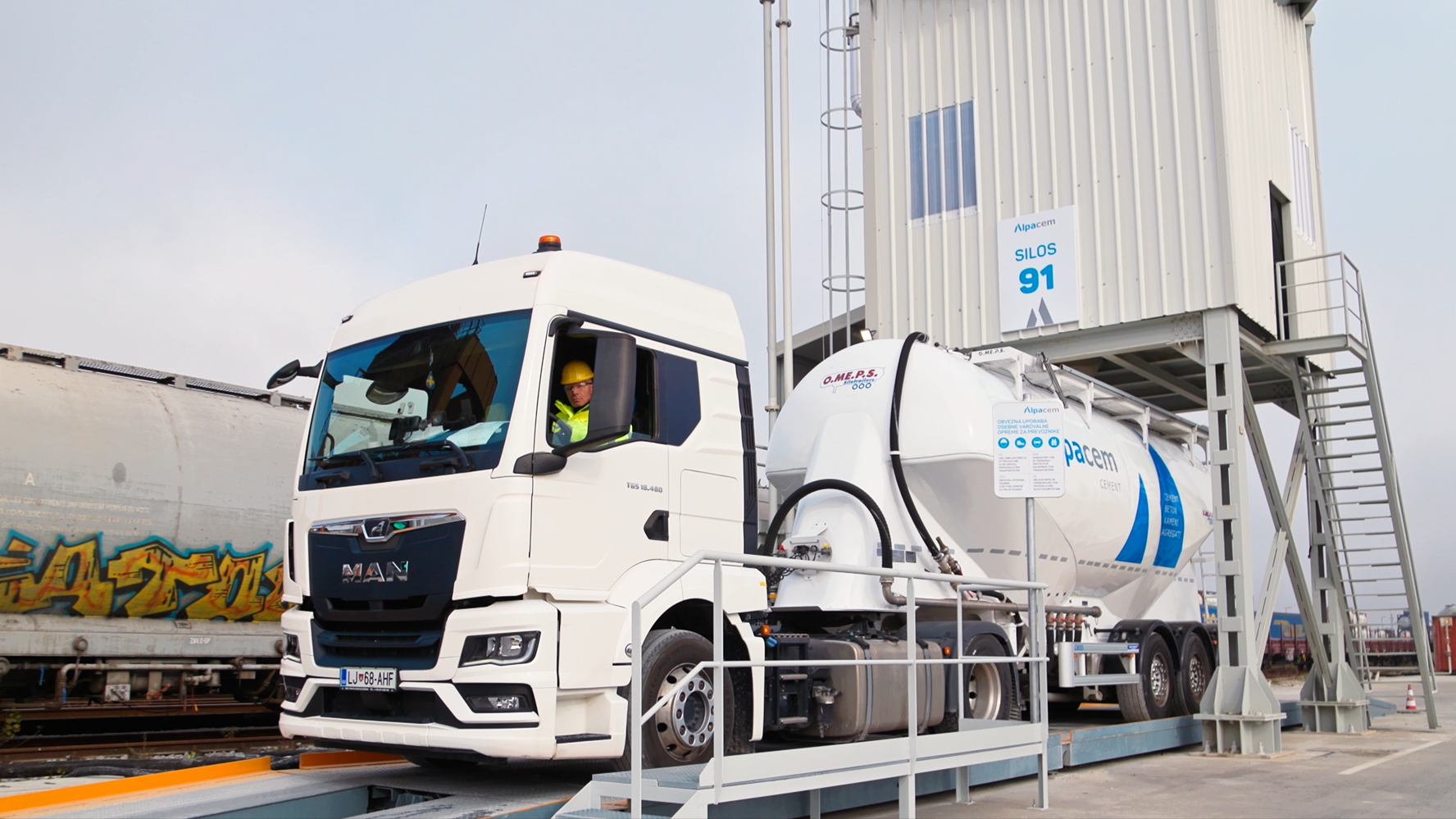
In Slovenia, this role is even more pronounced: Alpacem Cement is the country’s only domestic cement producer and one of the most technologically advanced companies in the region. It sees its mission as going well beyond traditional industrial modernisation: it aims to reshape the entire cement and concrete value chain and, in doing so, contribute to the decarbonisation of Slovenia’s infrastructure.
A progressive vision amid real-world challenges
European regulation demands rapid emissions reductions by 2040, yet the industry warns that implementation is lagging behind political ambition. “For the ambitions we have in Europe, we are simply too slow,” says Dr Tomaž Vuk, CEO of Alpacem Cement.
Spatial planning procedures and permitting can take between five and ten years – significantly longer than in Asia or the United States. This means that industry must start deploying new technologies now if it wishes to achieve decarbonisation in time.
Despite these constraints, Alpacem is betting on technological innovation and a phased approach that balances environmental impact, energy realities and the expectations of local communities.
Low-carbon cement, the core of the global transition
Low-carbon cement is becoming one of the most important levers for reducing emissions in construction. Progress is built on the following pillars:
- a reduced clinker factor, using mineral additions (slag, fly ash, calcined clays),
- improved energy efficiency, digitalisation and process optimisation,
- CCUS technologies – capture, utilisation and storage of CO₂ – the only way to eliminate process emissions from limestone.
According to recent technical reviews of lowcarbon cements, as well as industry case studies on CO₂reduced concretes and pilot projects using advanced blended cements, pilot projects around the world already demonstrate 30 to 60% lower emissions while maintaining the same loadbearing capacity and full compliance with standards. The main obstacles remain cost, the availability of raw materials and regulatory rigidity. This is why, for innovators such as Alpacem, systematically expanding the portfolio of lowcarbon products and preparing the ground for future technologies is essential.
Energy, materials and technology
A comprehensive transformation is under way at Anhovo, combining advanced energy solutions, lower-carbon cement through improved materials, research into carbon capture, transport and storage, and the development of new technologies.
Advanced energy solutions include installing solar power systems in the cement plant’s industrial area, gradually electrifying processes, and significantly reducing the share of fossil fuels in favour of biomass and alternative fuels.
For the next phase of the transition – especially CO₂ capture – industry will require two to three times more energy than today, and it must be clean. “If our competitor in Africa has cheaper energy, green cement will be cheaper there,” warns Dr Vuk. This clearly shows that energy has become a strategic driver of technological innovation.
Lower carbon footprint through advanced materials
Alpacem is already reducing the clinker content of its cements and increasing the use of mineral additions such as slag, ash and filter ash. This supports the development of new low-carbon cements in line with the European standards.
Because process emissions from limestone decomposition cannot be solved through optimisation alone, Alpacem is exploring options for carbon capture, transport and storage. This technology will be essential in the next stage of the transition, as cement plants cannot achieve net-zero emissions without it.
The transition depends on trust
Innovation is not only technological. A successful transition requires the support of local communities. “With transformations of this scale, we must be able to listen to one another. Without trust, every step will be endlessly questioned or blocked,” emphasises Dr Vuk.
Alpacem therefore pairs its technological development with ongoing dialogue with local residents, transparent communication on environmental impacts and cooperation with the state and environmental organisations. This recognises that decarbonising industry is a societal project, not merely an engineering one.
Advancing eco-friendly infrastructure in Slovenia
Cement remains a cornerstone of modern infrastructure: durable, fire-resistant and locally available. Concrete accounts for around 50% mass of Europe’s building stock, yet only 15% of its embodied energy, making it a key building block of the green transition. Wood and concrete are expected to evolve as complementary materials of the future.
The transformation of the Anhovo cement plant therefore carries broader significance: Slovenia can demonstrate that advanced industry, environmental goals and community dialogue can be successfully brought together. This creates a model that other energy-intensive industries can also adopt.
The road ahead: innovation, investment and clear policy signals
For the widespread adoption of low-carbon cement, the following will be crucial: the introduction of a green public procurement system, appropriate CO₂ pricing, and support for investments in state-of-the-art technology and CO₂ infrastructure.
Alpacem acts as an early adopter. The company is already lowering its clinker factor, expanding the use of alternative fuels, and increasing energy efficiency. All of this forms part of its long-term strategy aligned with the goal of carbon neutrality. Thanks to Alpacem, Slovenia now has a remarkable opportunity to position itself at the forefront of low-carbon construction in Europe.