|
19 September 2026
|
|||
|
|||
|
Published by the Institute for Strategic Solutions (ISR)
|
|||
|
Read this online here. Visit The Adriatic at theadriatic.si
|
|||
|
Powered by NLB Group
|
|||
|
|
|||
One region, two clocksTine Kračun In Sarajevo this month, moderating a panel at the Sarajevo Security Conference on why economic integration with the European Union could stabilise this region, the absurdity of the Western Balkans' dual reality was impossible to ignore. At a gathering almost wholly consumed by hard security and defence, ours was the lone session arguing that stability is built from the bottom up: that convergence with the EU single market delivers investment, jobs and rising wages, and that a population which can feel that progress in its own household is the most durable security guarantee any government can offer. Outside the hall, the aftershocks of the death of Ratko Mladić, convicted of genocide and still serving a life sentence when he died in The Hague days earlier, were reverberating through Bosnia and Herzegovina, and the political response, as so often, chose the familiar script over the harder work of reassurance.
While tribal rhetoric continues to treat past grievances as political currency, an unforgiving demographic clock is ticking. Depopulation and brain drain pose a far greater threat to our collective future than any lingering historical dispute. As our youngest talent looks beyond the region's borders, economic integration is no longer a soft diplomatic exercise; it is a brutal economic necessity. These times demand pragmatic leadership. Capital and commerce must step into the vacuum left by politics. That momentum is already taking root in Albania's accelerating accession path. Tirana's alignment with European standards shows what is possible when reform meets market appetite. At our recent Slovenian-Albanian Business Forum at the MOS fair in Celje, co-hosted with SPIRIT Slovenia and AIDA and supported by NLB Group, the hunger for actionable cross-border partnerships was unmistakable. These are the commercial ties that build genuine resilience. As we prepare the next annual edition of The Adriatic, with an in-depth focus on Bosnia and Herzegovina, the mission of the Institute for Strategic Solutions (ISR) remains clear: to champion an agenda anchored in trade integration with the European Union, workforce modernisation and strategic energy autonomy. The choice is stark. The region can let politicians trade on past tragedies for short-term gain, or it can let market forces secure a viable European future. It is time to move past the political theatre and build an economy that gives the next generation a reason to stay. |
|||
|
|||
|
|
|||
|
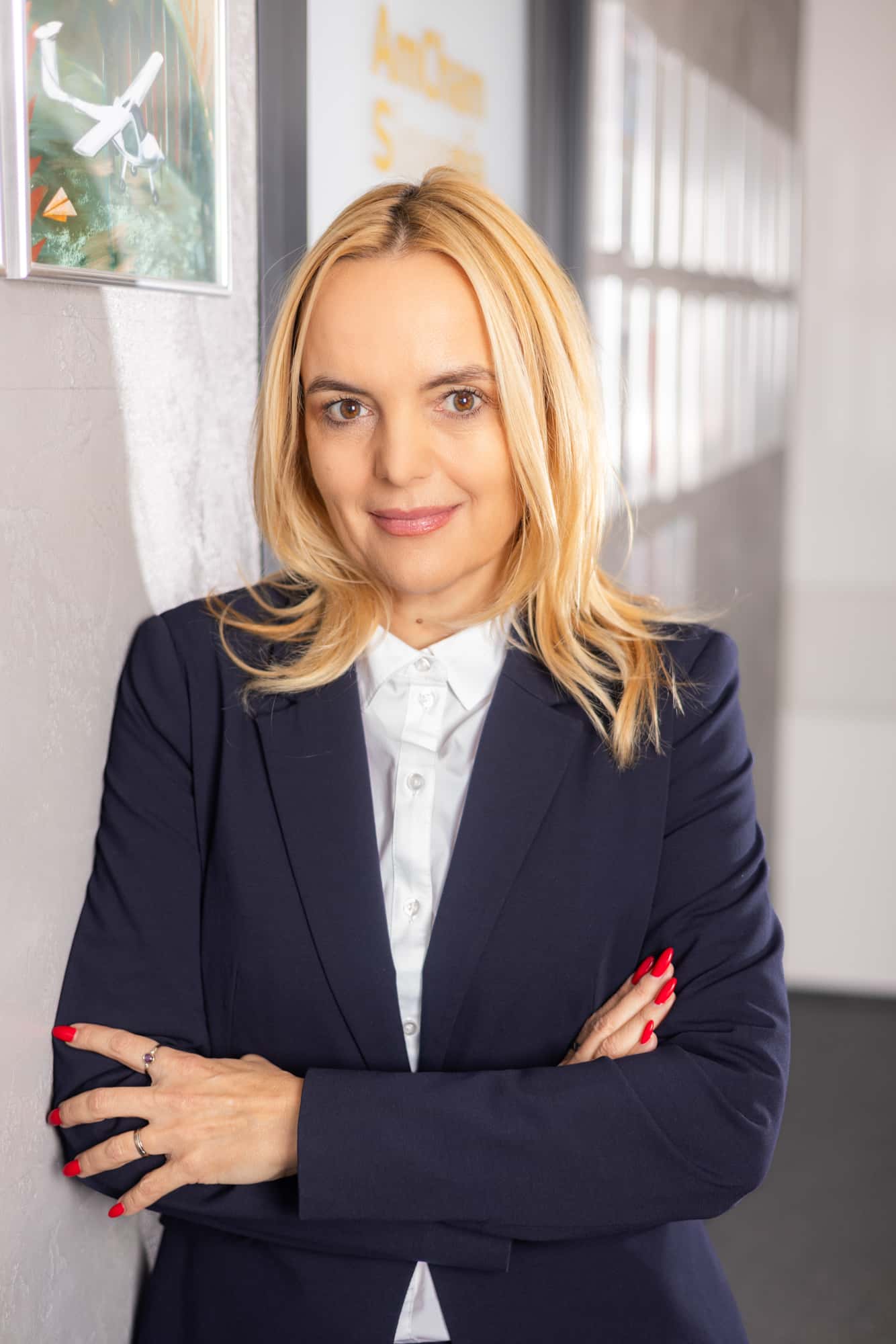
Tete-a-Tete No second actAjša Vodnik went on air at nineteen and stayed in Slovenian television for fourteen years, the last five co-owning the channel she appeared on, before deciding the work no longer matched her compass. She now runs AmCham Slovenia and chairs AmChams in Europe, 50 chambers across 48 countries, though she would dispute that this is a second act: in her telling, there is only ever one continuous story.
|
|||
|
|
|||
|
|||
|
|
|||
|
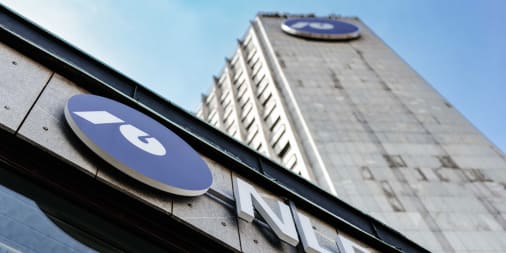
Mind the gap Slovenia's largest bank mulls the one Western Balkan market it does not haveThe Adriatic NLB, Slovenia's largest bank, is preparing to open a representative office in Albania and would consider an acquisition there if a bank came up for sale, the chairman of its management board, Blaž Brodnjak, told the Slovenia–Albania: An Economic Bridge forum at the MOS fair in Celje on 17 September. The group is studying the market before committing, and while nothing is in process, "if an opportunity to acquire a bank arises in the coming months, we will certainly take it very seriously," he said. NLB's filing for the end of June reads as a map of where the group has spent the past two decades: Slovenia €6.57 billion, Serbia €3.17 billion, North Macedonia €1.28 billion, Bosnia and Herzegovina €1.21 billion, Kosovo €1.04 billion, Montenegro €628 million, Croatia €165 million. Then a long tail of minor positions in France, Germany and dozens of other countries. Albania is in that tail, at €13,000.
Albania is the last gap in the regional map NLB has spent two decades building. The group's stated vision commits it to the financial needs of its clients across South-East Europe, and a presence in Tirana would complete the picture. The full dispatch, with the market share that would make a deal worth doing, is here. |
|||
|
|
|||
|
In Brief Hashim Thaçi, Kosovo's former president, and Jakup Krasniqi, the Kosovo Liberation Army's wartime spokesman, were sentenced to 25 years each in The Hague on Wednesday, with Kadri Veseli given 18 and Rexhep Selimi 13. The finding underneath is narrower than the sentences suggest. The panel acquitted all four on every crimes-against-humanity count, holding that the prosecution had not proved the acts were directed against a civilian population, so what it punished was a set of crimes committed in the course of a war rather than the criminal enterprise the indictment described. All four may appeal, and remain in detention in The Hague while they do. Young men carrying KLA flags marched on the headquarters of EULEX, the European Union's rule-of-law mission in Pristina, on Wednesday in response to the verdict, scuffled with riot police and threw stones at the building, and a smaller group held the street overnight before demonstrations resumed on Thursday. The court that imposed the sentences is a Kosovo court, created by Kosovo's own parliament, yet the anger found the EU instead. A mission that supports the court's work, runs on a mandate to June 2027 and has had a new head only since August now carries a fury that Kosovo's prime minister and assembly speaker have voiced from inside institutions Brussels funds. Enlargement barely featured in Ursula von der Leyen's state of the union address on Wednesday, in the week the Western Balkans produced its most consequential news in a decade. She promised roadmaps for the most advanced candidates, named Montenegro and Albania, left a place open for Moldova and restated that accession remains merit-based. The omissions carry more: nothing on Serbia's path, a little over a week after EU leaders condemned the Belgrade funeral of Ratko Mladić, and nothing on Montenegro's own timetable of 18 of 33 chapters closed and negotiations due to conclude this year, which makes a roadmap a strange thing to offer a country that believes it is nearly finished. |
|||
|
|
|||
|
Gripes, requests or inquiries are always welcome. Drop us a line at [email protected].
|
|||
|
|
|||
|