|
20 June 2026
|
|||
|
|||
|
Published by the Institute for Strategic Solutions (ISR)
|
|||
|
Read this online here. Visit The Adriatic at theadriatic.si
|
|||
|
King's Birthday Edition - with thanks to the British Embassy for a memorable evening
|
|||
|
|
|||
Creating memories on an industrial scaleJure Stojan As any head of state can attest, not all dates of birth are equally convenient. June is pretty much the ideal month for holding birthday celebrations. Not yet as hot as July or August, it is decidedly warmer and sunnier than May, with less a chance of rain showers than in September. The weather in June is quite simply inviting. It is a pleasure to meet on a well-manicured lawn, in the pleasant shadow of a historic palace, and toast to His Majesty's most excellent health.
In matters of state, the actual date of birth is far less important than the convenience of June. The current reigning sovereign of the United Kingdom, HM King Charles III, first saw the light of day on 14 November 1948. It was a month not really known for its light or pleasant weather. Thus, it was natural to observe the tradition of the House of Windsor, and move the official celebrations to a month with more reliable sunshine. The reason is simple. In reality, royal birthdays are only tangentially connected with the life of a monarch. It is not a private occasion but a decidedly public one. The King is respected but not worshipped. The King's Birthday is a celebration of a constitutional monarchy, an occasion for all his subjects, across all his nations, to have a good time. Contemporary kingship shares only a few traits with its medieval or even ancient forms. Yes, there is pomp and circumstance and in the United Kingdom, a lavish coronation in the same hallowed halls of Westminster Abbey. But even the most fearless forbears would shudder if faced with the ordeals of contemporary monarchs and their immediate families. Each and every year, the tallies are indeed awe-inspiring. The Royal Family carries out about 2,000 official engagements annually and entertains about 70,000 people at lunches, dinners, receptions, and garden parties. They receive, and answer, about 100,000 letters. For each of these guests and correspondents, even the fleetest contact with a member of the Royal Family is a matter of lifelong memories. For the King and the Royal princes and princesses, it is a full-time job, scripted to detailed agendas, and undertaken with impeccable manners, etiquette, and a friendly smile - even when they do not feel like smiling. Their role is to create positive impressions on an almost industrial scale. All their lives, they have trained in how to make even the shortest interactions pleasurable. So, having an official birthday in June is only a continuation of the same logic. The predictably nicer weather makes it easier to create beautiful memories. |
|||
|
|||
|
|
|||
|
|||
|
|
|||
|
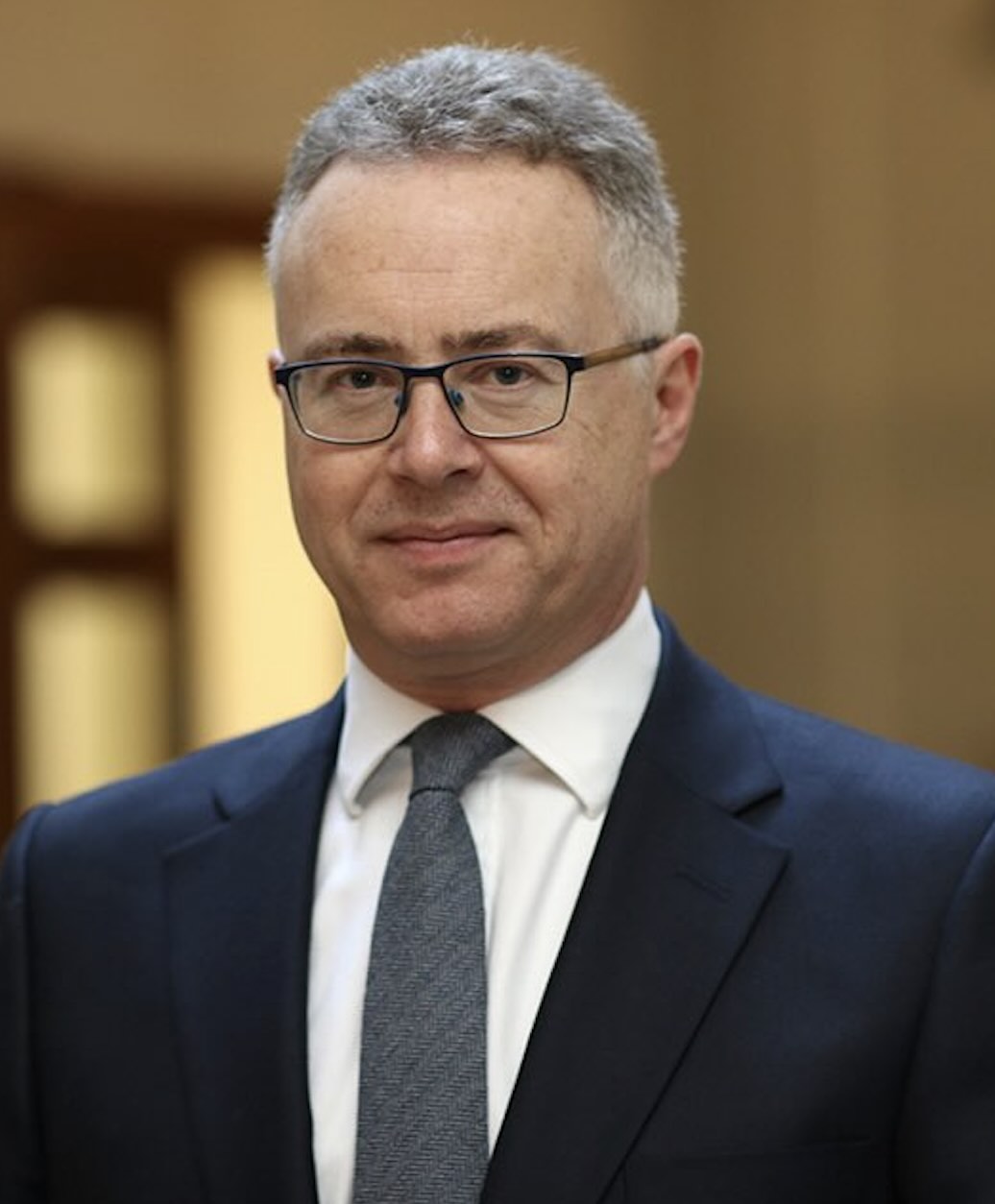
Tete-a-Tete The romantic rationalistNigel Baker is Britain's Chargé d'Affaires in Slovenia, capping a 37-year diplomatic career that has taken him to La Paz, the Vatican and Bratislava as ambassador. His postings trace the arc of post-Cold War Europe: he began in Czechoslovakia as the Iron Curtain fell, worked on NATO enlargement, and has spent recent years on the Russian challenge to liberal order. He has served under ten prime ministers and eighteen foreign secretaries. History, he says, is the root of understanding.
|
|||
|
|
|||
|
Governmental web portals Statehood by designAndraž Tavčar None of us expect much when combing over government websites apart from being able to reliably offer us a cursory as well as an in-depth entry way into getting to know a particular country we're interested in. Yet, through research and repeated visits to these portals, one begins to notice a shifting pattern, in that many of them have been redesigned with a modern, polished aesthetic that seeks to convey something far beyond mere functionality.
Albania's e-Albania portal greets visitors with a swimming-pool-blue button and the now infamous new AI minister, named Diella, illustrated in traditional Albanian dress. It reads less like a government website and more like a business website, which is precisely the point. Government web design has become a form of soft power projection, wherein states project not beyond their capacities, but what kind of state they aspire to become. Read the full survey of the region's governmental portals here. |
|||
|
|
|||
|
In Brief Weeks of protests against a $4 billion luxury resort backed by Jared Kushner and Ivanka Trump have evolved into the most significant political crisis of Prime Minister Edi Rama's fourth term. The leaderless, non-partisan movement - dubbed the "Flamingo Revolution" after the protected lagoon threatened by the development - has drawn students, professionals and environmental activists onto the streets in numbers not seen in years. Rama blames Iranian hackers and "foreigners who hate Trump", but the project poses a genuine foreign policy conundrum, risking alienation from Brussels at a time when EU and US interests in the Western Balkans are increasingly at odds. Roberto Vannacci, a former Italian army general, last week launched National Future after leaving Matteo Salvini's League over what he viewed as the governing coalition's soft stance on immigration and military aid to Ukraine. His priorities include reducing the foreign-born population to 4 per cent, leaving the euro area and the Green Deal, and ending the ban on nuclear energy. Polling at 4-5 per cent ahead of the 2027 election, National Future could leave Giorgia Meloni's coalition short of a majority - or force her further right. MEPs in Strasbourg backed the membership prospects of Montenegro and Albania, with rapporteurs calling the goal of concluding negotiations by end-2026 and end-2027 respectively "ambitious but achievable". North Macedonia, the report said, should be next. Bosnia and Herzegovina drew harsher scrutiny: "the judicial system is very weak, reforms are slow, media freedom is on a very low level", rapporteur Ondřej Kolář told the chamber. The report on Serbia is expected in July. |
|||
|
|
|||
|
Gripes, requests or inquiries are always welcome. Drop us a line at [email protected].
|
|||
|
|
|||
|